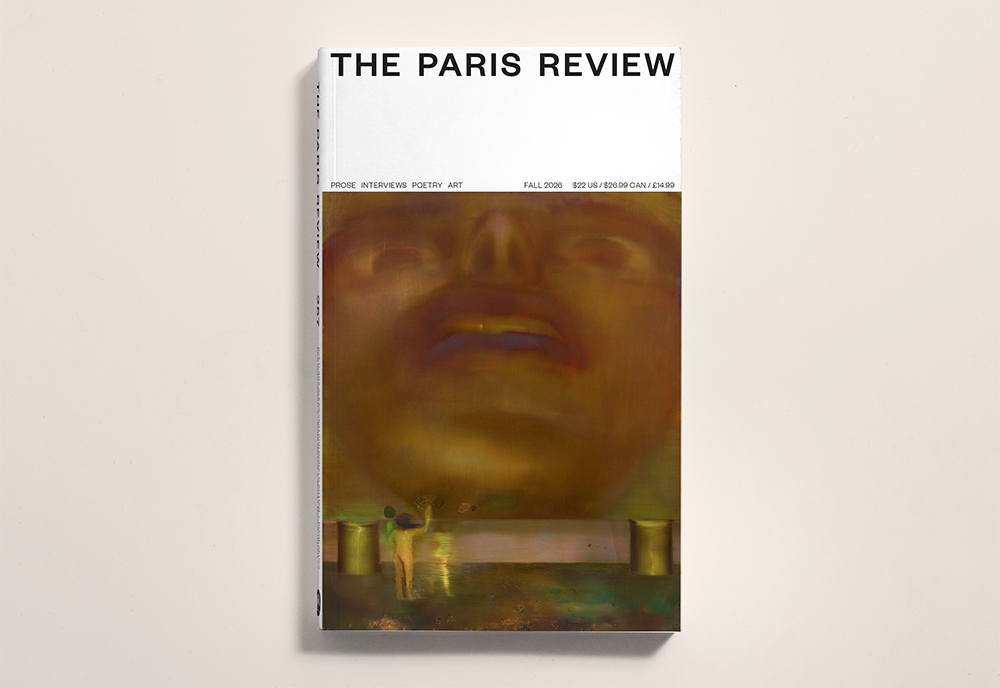
Issue 257, Fall 2026
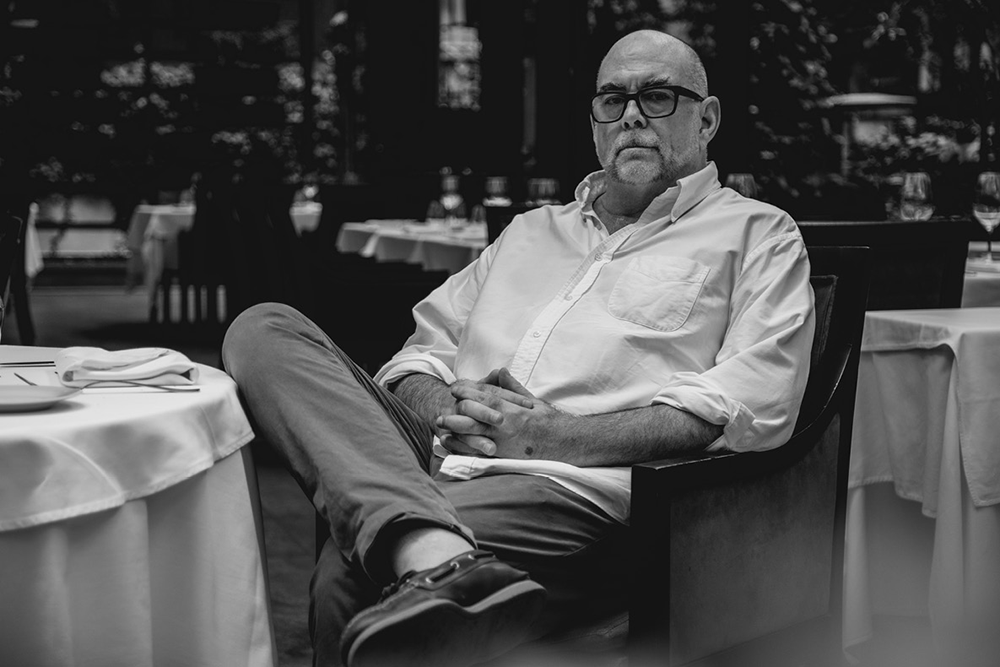
Belgrade, 2026. Photograph by Ivana Todorović, courtesy of Donald Antrim.
Donald Antrim embodies the kind of gentleness that is its own form of charm. He embraces uncertainty, but when he speaks, he finds his way to what he wants to say, and when he writes, necessary miracles arrive on the page. Antrim’s gift has been to establish a calm and original voice in his writing, one also in touch—subconsciously or through some other strata of the sublime—with the multitude of the American canon. With his Southern regard for dark schisms, the maimed, and the gothic, his psychedelic tropes, his knowing gaze on domestic norms and male hunger, and his quick-fire grasp of everyday oddness, his work is never simply one thing but is one thing after another.
Antrim’s first novel, Elect Mr. Robinson for a Better World, was published in 1993. Written with a warm blend of fantasy and suburban realism, and painting a morbidly hilarious portrait of small-town rivalries beginning with the drawing and quartering of a recently ousted mayor, the novel established Antrim as one of the premier stylists of his generation. The Hundred Brothers (1997), a satirical, absurdist novel about a family supper, was a finalist for the PEN/Faulkner Award in 1998, and The Verificationist, about the rites of psychoanalysis, set in a New England pancake house, was published in 2000. Antrim has also written two memoirs: The Afterlife (2006), a portrait of his late mother, who suffered from alcoholism, and One Friday in April: A Story of Suicide and Survival (2021), a book about his mental illness and hospitalizations. His acclaimed short stories, which first appeared in The New Yorker and are collected in The Emerald Light in the Air (2014), are sustained, interior masterpieces of instability and desire, set among the bohemian middle class of a more or less contemporary New York. A forthcoming novel, My Eliot (2027), the product of twenty-five years of work and inspired by his father, a scholar of T. S. Eliot, is another fresh turn: a psychological story that reads like a memoir set in a magical forest.
Antrim was born in Sarasota, Florida, in 1958, and lives mainly in Brooklyn with his wife, the pianist Marija Ilić, though the couple spends part of the year in an apartment in Belgrade that belonged to her family, in a Yugoslav-era Brutalist complex. He traveled from there to London for our first sessions in July of last year at my office in Primrose Hill. One summer’s day, we visited the flat where Eliot had lived and died; I’d arranged the outing with Clare Reihill, who runs the Eliot estate. We drank tea out of Mrs. Eliot’s favorite teacups (covered in pink roses), and, wandering from room to room, Antrim, who was in the throes of finishing the new book, seemed in awe, as though everything were alive, except Old Possum, of course, whose ghostly presence was nonetheless palpable.
Toward the end of our sessions almost six months later, in Brooklyn, it was already growing dark at 4 P.M. The tall, bespectacled figure sitting on the living room floor with his back to a sofa, wearing blue trousers and a white shirt, remained open and quick to laugh throughout. Antrim was surrounded by books he has either loved reading or intends to love reading one day, and vinyl records also. On the wall hung a large photograph taken in New Hampshire by an old friend of Antrim’s, showing a man pulling a canoe up a creek, over rocks. By then, Antrim had learned that your average Scottish interviewer runs on biscuits; the plate was nearly empty. As the session reached its conclusion, he went to put on Joy Division’s Closer.
INTERVIEWER
Let’s start with the title story from your collection The Emerald Light in the Air. How did it begin for you?
DONALD ANTRIM
The narrator of that story has some of my history—psychiatric hospitalization, the loss of an important relationship with an artist, loneliness and isolation at home. The narrator lives in a big house in the country. I live in Brooklyn. But just the same. I had the idea to put him in the Mercedes, and he goes out, and then there’s the locust bough that’s fallen across the road. And at that point, the story shifted for me. I no longer saw myself in the character. The character did not look like me or sound like me. I saw him in a shirt that I might not wear. He was heavier than I was then. Differences like these might seem slight, but they’re not. They can lead to insights.