Issue 68, Winter 1976
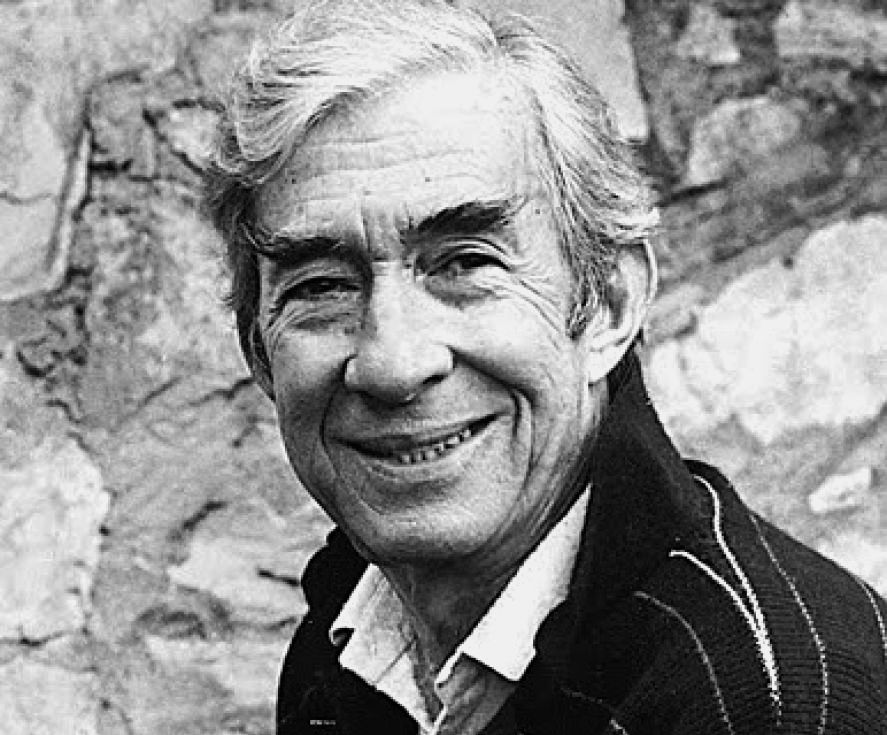
The interview with William Goyen took place on a sunny Saturday afternoon in June, 1975—the spring of Goyen’s sixtieth birthday and also of the publication of the 25th Anniversary Edition of his first novel, The House of Breath, a book which became a literary sensation upon its first appearance in 1950. Since that time he has published Ghost and Flesh (1952), In a Farther Country (1955), The Faces of Blood Kindred (1960), The Fair Sister (1962), A Book of Jesus (non-fiction, 1973), Come, the Restorer (1974), and Nine Poems (1976). Goyen's Selected Writings appeared in 1974, and his impressive Collected Stories late in 1975. Four of his plays have been produced. During 1976-77 he was Writer-in-Residence at Princeton University. He is married to the actress Doris Roberts.
Taped over a three-hour period in the home of a friend in Katonah, New York, Mr. Goyen remained seated on a sofa throughout the interview, sipping a soft drink. He requested that baroque music be played over the stereo, “to break the silences.” There were silences—long, considering pauses between thoughts.
William Goyen is slender and lanky, and a handsome figure at sixty. His aspect is intense and patrician, his manner gracious and courtly. Goyen’s hair is silver; he speaks with a strong Southwestern accent.
INTERVIEWER
In the introduction to your Selected Writings, you stated that you began writing at the age of sixteen, at a time when you were also interested in composing and dancing and other art forms. Why writing as a career rather than one of the other arts?
WILLIAM GOYEN
My foremost ambition, as a very young person, was to be a composer, but my father was strongly opposed to my studying music—that was for girls. He was from a sawmill family who made a strict division between a male’s work and a female’s. (The result was quite a confusion of sex roles in later life: incapable men and oversexed women among his own brothers and sisters.) He was so violently against my studying music that he would not allow me even to play the piano in our house. Only my sister was allowed to put a finger to the keyboard… the piano had been bought for her. My sister quickly tired of her instrument, and when my father was away from the house, I merrily played away, improving upon my sister’s études—which I had learned by ear—and indulging in grand Mozartian fantasies. In the novel The House of Breath, Boy Ganchion secretly plays a “cardboard piano,” a paper keyboard pasted on a piece of cardboard in a hidden corner. I actually did this as a boy. My mother secretly cut it out of the local newspaper and sent off a coupon for beginners’ music lessons. I straightaway devised Liszt-like concerti and romantic overtures. And so silent arts were mine: I began writing. No one could hear that, or know that I was doing it, even as with the cardboard piano.
INTERVIEWER
You weren’t having to write under the sheets with a flashlight, were you?
GOYEN
You know, I was playing my music under the quilt at night, quite literally. I had a little record player and I played what music I could under the quilt and later wrote that way. So I did write under the sheets.
INTERVIEWER
What was your father’s reaction to writing?
GOYEN
Something of the same. He discovered it some years later, when I was an undergraduate at Rice University in Houston. He found me writing plays, and to him the theater, like the piano, was an engine of corruption which bred effeminate men (God knows he was generally right, I came to see), sexual libertines (right again!), and a band of gypsies flaunting their shadowed eyes and tinseled tights at reality. When my first novel was published, my father’s fears and accusations were justified—despite the success of the book—and he was outraged to the point of not speaking to me for nearly a year.
This could, of course, have been because the book was mostly about his own family—the sawmill family I spoke of earlier. My father, his brothers, his father, everybody else were lumber people, around mills… and forests. I went around the sawmills with him, you see, and saw all that. He loved trees so! My God, he would… he’d just touch trees… they were human beings. He would smell wood and trees. He just loved them. He knew wood. He was really meant for that.
Poor beloved man, though, he later came around to my side and became the scourge of local bookstores, making weekly rounds to check their stock of my book. He must have bought a hundred copies for his lumbermen friends. God knows what they thought of it. Before he died he had become my ardent admirer, and my Selected Writings is dedicated to him.
INTERVIEWER
Do you agree with the theory that an unhappy childhood is essential to the formation of exceptional gifts? Were you genuinely unhappy?
GOYEN
How could it have been any other way? My own nature was one that would have made it that way. It was a melancholy childhood. It was a childhood that was searching for—or that needed—every kind of compensation it could get. I think that’s what makes an artist. So that I looked for compensation to fulfill what was not there.
INTERVIEWER
How have the physical conditions of your writing changed over the years? What is the relation between the creative act and privacy for you, today? In your Note on the 25th Anniversary Edition of The House of Breath, you stated that part of the novel was written on an aircraft carrier in the Pacific.
GOYEN
Since my writing began in the air of secrecy, indeed, of alienation—as the work had to be done without anyone’s knowing it—forever after my work has had about it the air of someone in solitude having done it, alienated from the press of society and the everyday movements of life.
On the ship, where I continued working, I found that there are many hidden places on an aircraft carrier where one can hide out and do secret work. And this was easily achieved. Also on the night watches and so forth, there was a lot of time. There is a great deal of free time aboard a ship in wartime, ironically. This kind of tradition in my work has been mine all my life, and I have generally lived in hidden places. In New Mexico it was at the beautiful foot of a mountain (the Sangre de Cristo in the primitive village of El Prado), and also in a mysterious mountain (Kiowa Mountain—the D. H. Lawrence Ranch called Kiowa Ranch, over San Cristobal, near Taos). And in Europe—Zurich, Rome—I worked in backstreet pensions.
Yet more and more, as I get more worldly and have the security of having survived, I feel that it is not necessary to be that far removed from the workings of daily life and the daily lives of people. Indeed, the older I get and the more I write, the more I feel it important to be a part of daily life… to know that it surrounds me as I work. I presently live in a large apartment on the West Side of New York City. One of those rooms is mine, and it’s an absolute hideaway, yet all around me in the other rooms the life of a family goes on, and I like to know that. I also like to know that twelve flights down I can step onto the street in the midst of a lot of human beings and feel a part of those. Whereas, in the old days, in New Mexico, I was brought up—taught—by Frieda Lawrence to see that simple manual endeavor is part of art. I would work in gardens and dig water ditches and walk in mountains and along rivers when I was not writing, and I felt that it was absolutely essential to my work. That’s changing for me now. I’m more city-prone. Maybe the world is changing, too. Maybe solitude is best had in the midst of multitudes.
It’s amazing how quickly something gets written. Now, when it comes, it can be on a bus, or in a store. I’ve stopped in Macy’s and written on a dry-goods counter and then suddenly had a whole piece of writing for myself that was accomplished, where earlier in my life I felt I had to spend a week in a house somewhere in the country in order to get that. Conditions change.
INTERVIEWER
Some say that poverty is ennobling to the soul. Is economic stability helpful to a writer? On the other hand, do you think wealth can be harmful?
GOYEN
It can be harmful. This depends on the stage in a writer’s life, of course. As a young man, for me… I speak now not as a wealthy or an impoverished man, but as a man looking back when he was younger… it was imperative that I live very simply and economically. Living in Taos where—who would have believed it then, fifteen or twenty years later a whole migration of young hippies would come to live and meditate in the desert just where I had lived—I was totally solitary. It was imperative for me and my work that I keep everything simple and have practically nothing at all. I lived in just a mud house with a dirt floor on land that Frieda Lawrence gave me out of friendship. I built it with a friend and a couple of Indians. Yet to live in absolute poverty all his life could harm a writer’s work. The hardship and worry over money in writers as they get older is a social horror; grants given to writers should be sufficient, so that they are able to live with amplitude and, yes, some dignity.
INTERVIEWER
The genesis of it all goes back to that aircraft carrier, doesn’t it?
GOYEN
I thought I was going to die in the war. I was on a terrible ship. It was the Casablanca, the first baby flattop. There were always holes in it, and people dying and it was just the worst place for me to be. I really was desperate. I just wanted to jump off. I thought I was going to die anyway, be killed, and I wanted to die because I couldn’t endure what looked like an endless way of life with which I had nothing to do—the war, the ship, and the water… I have been terrified of water all my life. I would have fits when I got close to it.
Suddenly—it was out on a deck in the cold—I saw the breath that came from me. And I thought that the simplest thing that I know is what I belong to and where I came from and I just called out to my family as I stood there that night, and it just… I saw this breath come from me and I thought—in that breath, in that call, is their existence, is their reality… and I must shape that and I must write about them—The House of Breath.
I saw this whole thing. I saw what was going to be four-five years’ work. Isn’t that amazing? But I knew it was there. Many of my stories happen that way. It’s dangerous to tell my students this because then these young people say, “Gee, all I’ve got to do, if I really want to write, is wait around for some ship in the cold night, and I’ll blow out my breath, and I’ve got my thing.”
INTERVIEWER
So this sustained you?
GOYEN
It brought my life back to me. I saw my relationships; it was extraordinary. Lost times come for us in our lives if we’re not phony and if we just listen; it hurts, but it’s also very joyous and beautiful… it’s a redemption… it’s all those things that we try to find and the world seems to be looking for… as a matter of fact, that’s the hunger of the world. So there it was on the ship and it just came to me. I saw so much… that I wouldn’t have to go home and they wouldn’t have to suffocate me; they wouldn’t kill me; I’d find other relationships.
INTERVIEWER
So after the war you didn’t go home.
GOYEN
When the war was over, I just dipped into Texas and got my stuff and left and headed towards San Francisco. I had come to love San Francisco when it was the home port for my ship, the aircraft carrier, and I thought that it would be a good place to live. But I passed through Taos, New Mexico, in winter, in February, and I was enchanted. It really was like an Arthurian situation… I couldn’t leave. It was beautiful and remote, like a Himalayan village, untouched, with this adobe color that was ruby-colored and yellow, all the magical colors of mud. It’s not all one color. It’s like Rome. Rome looks like that. And the sunlight and the snow… just about everyone on foot… a few cars… high, seventy-five hundred feet.
INTERVIEWER
Did the D. H. Lawrence commune in Taos have anything to do with your staying?
GOYEN
I didn’t know anything about the Lawrence legend. Had I, I might not have stayed at all. But I did, and right away I thought that I’d better get a little more money for myself before I settled in to work. So I got a job as a waiter at a very fashionable inn called Sagebrush Inn. I worked as a waiter for a few months until I met Frieda, who came in one night and I waited on her. The whole Lawrence world came to dinner there: Dorothy Brett and Mabel Dodge, Spud Johnson, Tennessee Williams: he was living up at the ranch. They all came to my table. And then the owner of the inn had to come out and say, “This young man is just out of the war and he wants to be a writer.” The worst thing I wanted said about me; it almost paralyzed me. Well, of course, Tennessee thought, Oh, God, who cares about another writer. But Frieda said, “You must come and have tea with me.” She said it right away. I went and from that moment… we just hit it off. It was almost a love affair. It was the whole world.
So it wasn’t Lawrence that brought me to her; circumstances brought me to Frieda and I found her a great pal and a luminous figure in my life on her own terms.
I would go to teas with her. She would have high teas. In Texas we had a Coke. But here it was the first time I met someone who baked bread, you know? She made a cake and brought it out… it was wonderful. She wore German clothes, like dirndls, and peasant outfits, and an apron. She was a kitchen frau. A few people came… Mabel Dodge had given her this great three-hundred-acre ranch in return for the manuscript of Sons and Lovers. That was the exchange. Except she never took Sons and Lovers away, so that the manuscript and many others, Women in Love, all holograph… were there in a little cupboard at the ranch. I could read them and look at them in amazement.
INTERVIEWER
What sort of things did you talk about?
GOYEN
We talked about the simplest things… well, really about love, about men and women and about sex, about physical living. Of course, I didn’t know that I was hearing what Lawrence had heard. Because it was Frieda who gave Lawrence this whole thing and it overwhelmed me.
The various people would come up in the summer and spend time with us, all kinds of people. Just simple people; Indians… she was close to Indians. I got very close to three Indians who were really like my family and helped me build my house.
INTERVIEWER
And then people like Tennessee Williams came.
GOYEN
Yes, Tennessee stayed up there with his friend, Frank Merlo. Tennessee told us that he heard Lawrence’s voice… he was a haunted, poor thing, but he did go a little too far. D. H. Lawrence was whispering things to him. Suddenly Tennessee had a terrible stomachache and it turned out that he had a very bad appendix and had to be brought down to Mabel Dodge. Mabel owned the only hospital; built it and owned it. It was like a European town and we were the only Americans, and I went to this hospital to witness Tennessee’s dying… he was always dying, you know. He was dying in this Catholic hospital screaming four-letter words and all kinds of things with the nuns running around wearing the most enormous habits, most unsanitary for a hospital. Mabel was wringing her hands and saying “He’s a genius, he’s a genius.” The doctor said, “I don’t care; he’s going to die, he’s got gangrene. His appendix has burst. We have to operate at once.” Tennessee said, “Not until I make my will.” The doctor said, “How long will the will be?” “Well, everything’s going to Frankie,” so they sat down, with Frank going through an inventory of all Tennessee’s possessions. “What about the house in Rome? You left that out.” Tennessee was just writhing in pain. So they made a list of all the things. And then they wheeled him off and he indeed had this operation, which to everyone’s surprise he managed to recover from. Eventually he got out of there…
INTERVIEWER
All this time you were working on The House of Breath. How did it get published?
GOYEN
It got published through Stephen Spender, indirectly. He came to that little village where I was living. I had sent a piece of it to Accent, a wonderful early magazine; it caused quite a kind of thing. I began to get letters. Random House wrote me a letter and said that they hoped this was “part of a book.” (All editors do that, I later learned.) They’ll say that even if it’s just a “letter to the editor” they’ve seen. That’s what editors have to do, God bless them, and I’m glad they do. About that time, Spender, a man I scarcely knew, whose poetry I scarcely knew, arrived in Taos on a reading tour. A wealthy lady named Helene Wurlitzer, of the family who made the organs, lived there and brought people into that strange territory to read, and give chamber concerts and so on. I never went to those things because… well, I didn’t have any shoes; I really was living on mud floors in an adobe house that I had built, utterly primitive, which I loved. I was isolated and terrified with all those things going on in me… but I was writing that book. Well, Spender heard that I was there… he heard through Frieda, who went to the reading, and so then he asked me if he could come to see me; he treated me as though I were an important writer. He had just read that piece in Accent and he asked if there was more that he could read. I showed him some other pieces and he sent those around. They were published and then somebody at Random House sent me a contract right away of two hundred fifty dollars’ advance for the book, and then promptly was fired. But Spender was very moved by the way I was living there; he wrote a well-known essay about the isolation of the American writer about my situation there. Nothing would do until Mr. Spender would have me come to London because he thought I was too isolated, too Texan, too hicky… He really took it upon himself to make that kind of decision for me. It was a wonderful thing that he did. The stipulation was that I would bring a girl who had come into my life with me (this blessed girl has passed on among the leaves of autumn), and she was very much a part of my life there in London, and together we were real vagabonds, embarrassing everybody—people like Stephen, and Cyril Connolly, and Elizabeth Bowen, Rose Macaulay, I mean, all of them…
INTERVIEWER
You stayed in Spender’s house?
GOYEN
I had a room at the top and Dorothy had a room in the basement, with the stairs between us, creaking stairs. It was an elegant house, an eighteenth-century house in St. John’s Wood. At four o’clock teatime in the winter it was dark, and they pulled Florentine brocaded curtains and turned on lights; it was a time of austerity still, but people came to tea. Veronica Wedgwood would arrive. Dorothy wouldn’t come up from the basement. She really hated this kind of thing. She vanished. She just wouldn’t participate. So I was really quite alone with this. I guess I must have kept her under wraps. I must have been very bad to her. I don’t know. I have to think about that sometime. But here they would come: Natasha, Stephen’s wife who was a gifted pianist and wanted to be a concert pianist, and so musicians came, and painters. Cyril Connolly was often there because he and Stephen were working together. Dame Edith Sitwell came. We went to her house and she read one night; she sat behind a screen because she wouldn’t read facing anyone or a group… behind a marvelous Chinese screen and you would hear this voice coming through the screen… all those people… that was a world that Spender gave me and was a great influence in my life and on my work.
INTERVIEWER
What an extraordinary change.
GOYEN
I was thrown into this elegant surround which was precisely the opposite of what I had been doing. It was right for me because my character, Folner, yearned for elegance. Suddenly my country people were singing out their despair in those great elegant houses. I saw cathedrals for the first time… I’d not really seen cathedrals… I was able to get to Paris and all around there. All this went into The House of Breath. I saw the Sistine Chapel—well, that’s the first page of The House of Breath, “on the dome of my skull, paradises and infernos and annunciations” and so forth. Europe just put it all right—everything that started in a little town in Texas, you see. It saved the book, I think. Because it made that cry, you know… it was an elegant cry… there’s nothing better than an elegant cry of despair…
INTERVIEWER
Did people worry what this tremendous change in venue—from Taos to Europe—would do to The House of Breath?
GOYEN
Some people worried about it. James Laughlin of New Directions, when I had published a bit, wrote me, “You are ruining your work fast; the influences you are coming into are coming too soon, and you’re allowing your personality to overwhelm your talent. Obviously people find your Texas personality… ” (and he could be a snide guy too) “ …charming and you might be of interest to them for a little while. But you are writing a very serious book and this will be permanently damaging to your work.” He really wanted me to get out of there.
INTERVIEWER
Were there other Cassandras about The House of Breath?
GOYEN
Well, Auden had kind of looked down his nose at me. He said it’s the kind of writing where the next page is more beautiful than the one just read. “One is just breathless for fear that you’re not going to be able to do it,” he said, “and that makes me too nervous. I prefer James.”
Christopher Isherwood said, “You know, my dear boy, you’ll never make it. That is what one feels when one reads you. You’ll never survive with this kind of sensibility unless you change, get some armor on yourself.” As a matter of fact, he wrote me and warned me again… he put it all down in a letter. And that did scare me. I was young and I was scared. But I knew that I had no choice. Then that feeling of doom really came on me… because I had no choice. I knew that I couldn’t write any other way.
INTERVIEWER
When you began writing The House of Breath, did you expect it to be published? Were you writing for publication?
GOYEN
I was most surely not “writing for publication.” But I don’t think there is any piece of the novel except one that was not published in magazines before the book itself was published.
INTERVIEWER
You said earlier your father was upset by the book when it was published. Had you been concerned about the family and hometown reaction?
GOYEN
Concerned, yes. I fell out of favor with many people in the town, let’s put it that way, and was just about disinherited by my own family. I had nasty letters, bad letters from home and heartbroken letters from my mother and my father. Generally the attitude was one of hurt and shock. It was not until fifteen years later that I was able to go back to the town! And even then rather snide remarks were made to me by the funeral director and by the head of the bank. We met on the street.
INTERVIEWER
So when you apply for a loan, you won’t do it in that town?
GOYEN
No, and I won’t die there, either.
INTERVIEWER
How long did you and the girl stay as Spender’s guests in England?
GOYEN
I settled in for the whole year of 1949… and I finished the book in that house at St. John’s Wood, in Stephen’s house. The girl was there until it got very bad; we had problems, and so she moved to Paris; that made me have to go to Paris to see her there and we had this kind of thing that was going on. When I came back, bringing my manuscript on the Queen Mary, she came with me to New York. But then we had one visit with Bob Linscott, my editor, who said to her, “My dear, do you like to eat? Do you like a roof over your head? You’ll never have it; he’s an artist. I feed him and Random House has kept him alive and probably will have to from now on. Don’t marry him, don’t even fall in love”… and he broke her heart. He really did. Poor Dorothy. He was right; I wasn’t about to be saddled down. And so it broke away, and that’s okay. Many years later I found a woman exactly like her. Her name was Doris, and so often I say to Doris, “Dorothy,” and I’m in trouble.
INTERVIEWER
That was quite a step for an editor to take. What do you think their particular function should be?
GOYEN
Well, really caring for authors… not meddling with what they did but loving them so much and letting them know that he cares. Generally at that point, when you’re starting, you feel that nobody does. Linscott looked after you and if you had no money, he gave you money. Once Truman Capote met me at the Oak Room of the Plaza. “I’m embarrassed to sit with you,” he said when I sat down, “your suit is terrible.” I hadn’t really thought about what I was wearing. He said, “I’m not going to have you wear that suit anymore. But,” he said, “I’ve ordered drinks for us and if you’ll just wait, I’m going to call Bob and tell him that he must buy you a suit that costs at least two hundred and fifty dollars.” And he did. Bob gave me money and he told me, “Well I guess he’s right.” He was lovable, Truman. He did sweet lovely things then.
INTERVIEWER
Carson McCullers was one of Linscott’s authors, wasn’t she?
GOYEN
I had first known her in this nest that Linscott had up there for these little birdlings of writers. Carson had great vitality and she was quite beautiful in that already decaying way. She was like a fairy. She had the most delicate kind of tinkling, dazzling little way about her… like a little star. Like a Christmas… she was like an ornament of a kind. She had no mind and she could make no philosophical statements about anything; she didn’t need to. She said far-out, wonderfully mad things that were totally disarming, and for a while people would say, “I’ll go wherever you go.” She’d knock them straight out the window.
INTERVIEWER
What sort of people interested her?
GOYEN
She had a devastating crush on Elizabeth Bowen. She actually got to Bowen’s Court: she shambled over there to England and spent a fortnight. I heard from Elizabeth that Carson appeared at dinner the first night in her shorts, tennis shorts; that poor body, you know, in tennis shorts and she came down the stairs; that was her debut. It didn’t last long. But that was Carson.