I arrived at Annisquam, a village nearby Gloucester, on Sunday, April 13, about midday. I was the houseguest of the poet Gerrit Lansing whom I had met a few years previously in New York at a party given by the poet Kenward Elmslie. Early in the evening Gerrit and I decided to set out for the Cut. It was seven-thirty when we reached Charles Olson’s flat to discover a note taped to the windowpane of the rear door, which read as follows: “Gerard: Best I can see is if another night will do me any good (if you can afford to try me again). Gerrit—Gerard—Have been in bed with some strange malady solidly since Saturday. This is to get you an immediate response.” I answered the note stating that I would try again the following night to catch him at home.
Monday at five-forty-five P.M. Gerrit and I returned to the scene. The sun had just disappeared behind the village scattered among the hills across the Cut. I had my Uher 1000 Report Pilot strapped to my shoulder. Upon reaching the door Gerrit and I discovered a second note (Olson’s notorious for his door memos), which read: “I shall try to see if anything comes into my head—I actually mean if my head has any response itself—and either change this note or call you and Gerrit.”
Returning to Gerrit’s house I immediately phoned Mr. Olson with whom I exchanged a few words and agreed that I should come by tomorrow at leisure without fixing a prescribed time.
The following day, Gerrit and I were met by Harvey Brown (publisher of Niagra Frontier Books) who, from nearby West Newbury, joined us for lunch. Afterward, Gerrit, Harvey and I decided to see if Olson was up and around. I didn’t have my machine with me, so was not expecting to begin an interview, having not planned to visit Mr. Olson at this time.
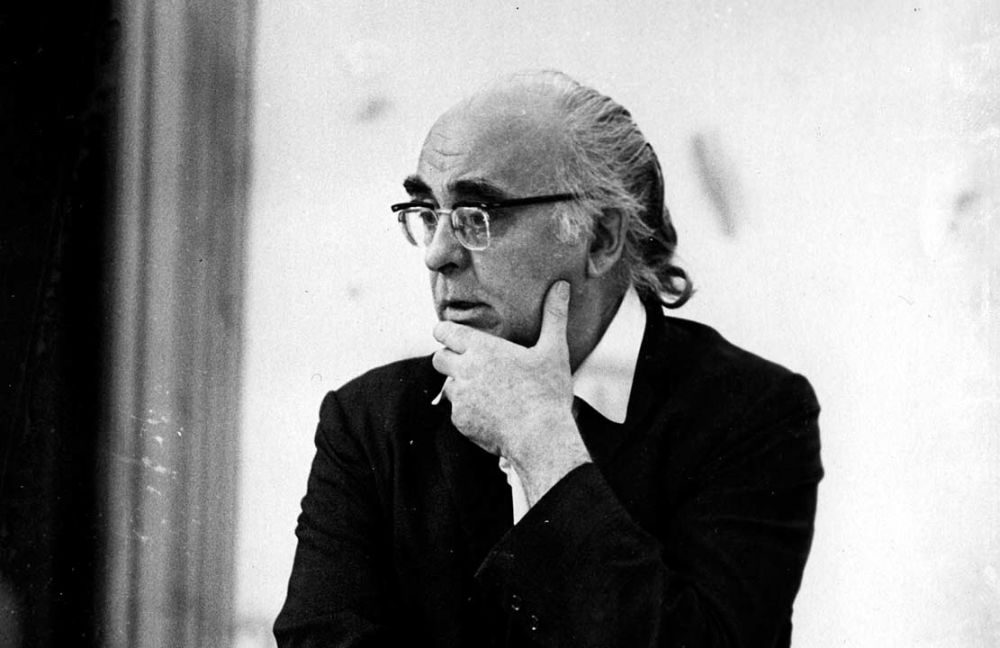
A chance meeting with Mr. Olson on Tuesday beside the wooden staircase leading to his second-story floor-through apartment was a benediction. We had not met before, but upon seeing him, it was as if he had been waiting for me to arrive the entire afternoon. I found him facing the driveway and the bay, enjoying the sunlight and the breath of brine wafting from the sea. His discourse was chiefly of the past; but he was not unmindful of current events nor was he unaffected by the picturesque surroundings of his secluded abode. With seeing vision, acutest faculties, and clearest utterance, Olson surveyed his little seaside hamlet and its environs, interpreted the marvels all about him and shed the light of his presence upon the common things of the sea and land always within sight. An hour with this gentleman of the old school, in seclusion deepened and shadowed by hill, cliff, rock, tree, shrub, and vine, and sweetened by the mingling odors of marsh and upland, was the beginning of what turned out to be an all-night affair. Listening to him speak, long after the sun went down and long after having run out of tape, until the morning hours, was a deep and most enchanting experience.
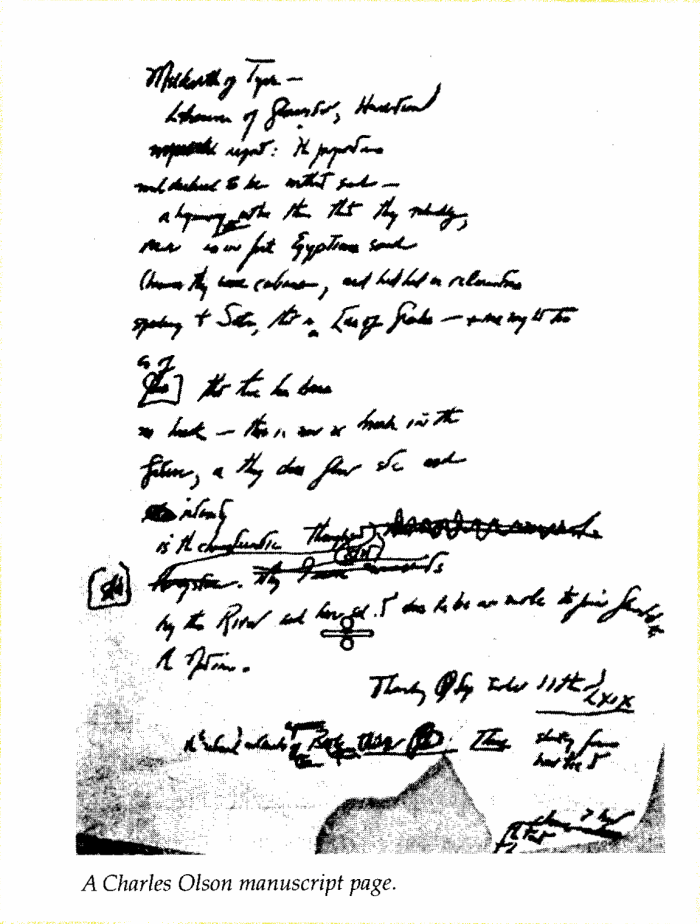
When I awoke a few hours after the all-night conversation, I found the flat empty. The cool blue sunlight of morning filtered through all the southern-exposure windows of the flat. In the kitchen on a table cluttered with beer cans, cigarette and cigar butts, and unanswered correspondence, I found a draft of a new Olson poem scribbled on the back of an envelope, which read:
To build out of sound the walls of the city & display in one flower the wunderworld so that, by such means the unique stand forth clear itself shall be made known.
I slipped his words like a thief into the breast pocket of my coat. My eyes then caught sight of a note addressed to me from Mr. Olson which read: “Forgive me if I sleep until I wake up (?)—Like, like, why now? When—call??? Ever???? Ever??? P.S. Buy more tapes.”
CHARLES OLSON
Get a free chair and sit down. Don’t worry about anything. Especially this. We’re living beings and forming a society; we’re creating a total, social future. Don’t worry about it. The kitchen’s reasonably orderly. I crawled out of bed as sick as I was and threw a rug out the window.
INTERVIEWER
Now the first question I wanted to ask you. What fills your day?
OLSON
Nothing. But nothing, literally, except my friends.
INTERVIEWER
These are very straight questions.
OLSON
Ah, that’s what interviews are made of.
INTERVIEWER
Why have you chosen poetry as a medium of artistic creation?
OLSON
I think I made a hell of a mistake. That’s the first confidence I have. The other is that—I didn’t really have anything else to do. I mean I didn’t even have enough imagination to think of something else. I was supposed to go to Holy Cross because I wanted to play baseball. I did, too. That’s the only reason I wanted to go to Holy Cross. It had nothing to do with being a priest.
INTERVIEWER
Are you able to write poetry while remaining in the usual conditions of life—without renouncing or giving up anything?
OLSON
That’s the trouble. That’s what I’ve done. What I’ve caused and lost. That describes it perfectly. I’ve absolutely.
INTERVIEWER
Are the conditions of life at the beginning of a work . . .
OLSON
I’m afraid as well at the end. It’s like being sunk in a cockpit. I read the most beautiful story about how Will Rogers and Wiley Post were lost; they stomped onto a lake about ten miles from Anchorage, Alaska, to ask an Indian if Anchorage was in that direction and when they took off, they plunged back into the lake. The poor boy was not near enough to rescue them, so he ran ten miles to Anchorage to get the people to come out. He said one of the men had a sort of a cloth on his eye and the guy then knew Post and Rogers were lost. Wiley Post put down on pontoons; so he must have come up off this freshwater lake and went poomp. Isn’t that one of those great national treasures. I’ll deal you cards, man. I’ll make you a tarot.
INTERVIEWER
Does poetry constitute the aim of your existence?
OLSON
Of course I don’t live for poetry; I live far more than anybody else does. And forever and why not. Because it is the only thing. But what do you do meanwhile? So what do you do with the rest of the time? That’s all. I said I promised to witness. But I mean I can’t always.
INTERVIEWER
Would you say that the more you understand what you are doing in your writing, the greater the results?
OLSON
Well, it’s just one of those things that you’re absolutely so bitterly uninterested in that you can’t even live. Somehow it is so interesting that you can’t imagine. It is nothing, but it breaks your heart. That’s all. It doesn’t mean a thing. Do you remember the eagle? Farmer Jones gets higher and higher and he is held in one of the eagle’s claws and he says you wouldn’t shit me would you? That’s one of the greatest moments in American poetry. In fact, it is the great moment in American poetry. What a blessing we got.
INTERVIEWER
Does Ezra Pound’s teaching bear any relevance to how your poems are formed on the page?
OLSON
My masters are pretty pertinent. Don’t cheat your own balloon. I mean—literally—like a trip around the moon—the Jules Verne—I read that trip . . . it is so completely applicable today. They don’t have any improvements yet.

INTERVIEWER
Do you write by hand or directly on the typewriter? Does either method indicate a specific way in which the poem falls on the page?
OLSON
Yeah. Robert Duncan is the first man to ask me the query. He discovered when he first came to see me that I wrote on the machine and never bothered to correct. There’s the stuff. Give me half a bottle. Justice reigns.
INTERVIEWER
What about line units and indentations in your poems, particularly The Maximus Poems? Are they visual shapes before you set them down on paper via the typewriter?
OLSON
Wow, if I only knew I did it. It would be marvelous. Did I? Thank you. I read that piece of Jeremy Prynne’s and he says everything right, accurately, I’m sitting here and thinking—isn’t it terrible until somebody tells you. I didn’t even know I did it though he says I did. I know I did what he said I did. Is that wonderful? Sad. So funny, because my vanity is so backfaced. I’m stuck with the other end. That’s honest. That’s honest.
INTERVIEWER
Would it be correct to say that your abbreviations derive from the device which Pound used in portions of the Cantos?
OLSON
I wish I had never done those damn things. I wish I had known enough to slip my head or something, because all that stuff isn’t that interesting and it’s the cheapest kind of nonattention to take a service mark for the whole thing. I think writing has gotten now to the point of AT&T or Western Union syntax.
INTERVIEWER
What is the distinction between your usage of the technique of quotation and that of Pound?
OLSON
To tell you the truth, I think both Pound and Eliot were after something rather different than us who came a little later, like myself, hip hip hip. All that matters is that the thing be the thing of the thing—a cool thing which is like a river for the tiger of the river. To say it in language is like hard as hell. The greatest poetry profile that was made this side or the other side of the Atlantic Ocean is called the anacreontic award and I hereby now make it and it’s pre-amanquiantic and it is absolutely way down below Atlantis and it has got no end, no end because it is like the stock of heaven and creation and it hasn’t even been booed or had a crown yet, but it exists. And I know where it’s playing—and I know where it is planted and I know where it is and we all do too, and we all know what we’re talking about, because it is down on the plantation under the trunk of that large cypress tree in all that goo way down there in that rain swamp . . .
INTERVIEWER
Yes. Would you define the nature of influence?
OLSON
That we are influenced, right? Yeah. That sounds too aphoristic. At all costs. Clear the air. Clear the air. The American advantage. Clear the air. Clear our equity.
INTERVIEWER
What is the distinction between influence and discipleship?
OLSON
I don’t really think these questions are, if you’ll excuse me, Gerard . . . I mean I respect you, but this is like when I was on Canadian television—one of those feature programs with a lady tiger from Tanganyika and buzz buzz and an American baseball, or something. The Canadian voice is still too rustic. So therefore only Englishmen can get announcers’ jobs on Canadian broadcasting. This English guy who had the notes never knew who I was or what I was there for. I was there to represent poetry. Like as against hunting in Tanganyika and playing sacred games. That’s very connective. Where did we go from? Was it an easy question I botched?
INTERVIEWER
It’s an easy question. You have to take these questions seriously.
OLSON
Well, are you in school, am I in school that I’m getting easy questions? I mean like jeez. I thought when I didn’t feel well for two days at least Gerard will keep me interested. Okay, I’m very fresh. I just woke up.
INTERVIEWER
Do you enjoy telling young poets what they ought to do?
OLSON
Oh, Jesus, God, if I ever did, may the Lord of the whole of the seven saints of India and China Buddhaland, Ganges town, and all takers this side of where the Tartars went—may they forgive me because like I am happy to have some friends here in the kitchen. I mean, wow, I’ve been very lucky, very lucky. I’m sorry, but I was born with a towel on my head.
INTERVIEWER
Let’s say you were to meet a young poet whose work shows signs of influence from your own work . . .
OLSON
It’s instantly as immaculate or as impeccable as the existence of something new and boom, boom, wang, doong, zip, toodle, deedo, etc., etc. Could you give me a light. I ain’t got no light. I have to answer that you don’t help people. You don’t help poor people in your poems. I’m afraid of teasing you, but don’t worry. I been trying to help people all my life—that’s been the trouble. My sense of responsibility. Otherwise I’m a free man, that’s a big eighteenth-century problem. I’m absolutely trying to climb up both walls at once. That beautiful Blake who is like four feathers of a raven caught down in a chasm of which we’re just later birds, but like, oh, he’s like a frozen four-winged raven, shrieking for the light—not frozen, but ahead of us. Like a box kite. We’re all moving, movie, moving, move. Isn’t it nice?
INTERVIEWER
What poet do you think you have had a lasting influence upon?
OLSON
Oh, wow, a lasting influence—my God. This indicates everything I’ve ever done that might possibly have had influence upon some of the men who I really feel connected to, and how! Wow. I mean if I could get drafts with reds, black, and ribbons I’d be a collector!
INTERVIEWER
Don’t you have the fear of being reduced to conformity by having too many other poets understand and imitate what you are doing?
OLSON
Oh, God, are you kidding? I mean, do you think I could be? Do you think I’m empty? I mean I got about five people who have given me evidence that they know what I said.
INTERVIEWER
Five, who were the five?
OLSON
Well, that would be really to create quite a successful society. In fact, very successful; from my point of view with that five, wow! But no, that’s literary history. And I’d have no interest in it whatsoever.
INTERVIEWER
Yes, but the people of The Paris Review want to know.
OLSON
Well, I know, but light a rock under The Paris Review. You are moved by the fact that another person sees what it is that you have done, which is like coming to the shore—like I fell off the big rowboat, and I carried the flag with me, and I swam ashore. I mean that kind of a marvelous result. It is that the other person somehow will say something relevant to what you have gotten yourself involved in. It is so important that it is like love, whatever that is. I mean if I can claim five persons who give me the sense that I’m where I was—then I’m still living. That’s as big as I know it to be. And that’s what’s so great.
INTERVIEWER
Would you say that the Black Mountain Review helped to systematize your ideas about “projective verse”?
OLSON
I’d written it long before the review—four years before the review appeared.
INTERVIEWER
What are the basic differences between projective verse and the objectivist movement established by the American poet Louis Zukofsky?
OLSON
Do you want me to educate you? It is like I mentioned earlier about being on Toronto TV and the announcer comes on and says, “Mr. Olson, what do you think of imagism?” And I said, “What?” I mean that’s the same sort of question as the indissoluble union of Mr. Pound and myself at the Pratagiano or something—of the skin of being which is as true in poets’ loves for each other and in parenthood as it is in the whole forms of life—trees, ferns, and eventually fair rocks in the earth.
INTERVIEWER
How do you account for the change of trend in American poetry today from experiment and technique to subject matter? Do you think projective verse helped to bring this literary revolution about? Or is there little doubt that this type of poetry would have eventually been written without you?
OLSON
Same reason why this nation is going to hell right now—because it finally got caught up with itself. The tail got caught in the mouth, or something. I tried to answer this once. In Toronto a marvelous ex-wrestler poet named Harry Moscowitch, I think, used to be mad at me and after I finished reading, he said, “Why don’t you write like William Butler Yeats?” There was this protest from the audience, like modern new gangsterism—William Butler Yeats? Well, I didn’t know what to say. Moscowitch. Harry Moscowitch. I really didn’t know. I mean I felt so peculiar—what could I do?
INTERVIEWER
Why is it that so many poets tend to shy away from writing about nonpoetic things like the mass media or things that aren’t considered poetic or proper poetic subjects?
OLSON
You know what the answer is—so simple—because they’re not. They’re social secondary matters which we have the government to take care of. I mean we have no interest in such servile mechanisms. That’s why Mr. Foreman figures in the home. Our control of the planets as well as those machines is just vulgar matter. And in fact is based upon vulgar matter. It is simply an improvised condition of vulgar matter and will continue until somebody says this and really hears it because the thing is literally as old.
INTERVIEWER
Well, would you say that it is not poetic to glamorize things like mass media in poetry?
OLSON
That it is not poetic to glamorize? What’s that connection to poetry? Mass media? I think it is a waste of energy—yeah, like a newspaper, because obviously in five years we will have won it all back. That is what I mean—that we won’t want it all back. No, that’s not fair, I guess.
INTERVIEWER
Why would we want it all back?
OLSON
No, I got you. I got you. I got you. I got you. I mean we want what’s been suddenly disallowed.
INTERVIEWER
Were The Maximus Poems or the Mayan Letters written out of your emotions or do they represent a state of consciousness?
OLSON
I hope so. Altogether the question satisfied me completely.
INTERVIEWER
Have you ever found yourself struggling with existing ideas in a poem without being able to find a direction for new ideas?
OLSON
I don’t, like I said in The Maximus, I didn’t know there were any ideas. Ask me another question, immediately, on the same point.
INTERVIEWER
Do you find that one new word that comes to mind alters the whole picture, and you are obliged to rebuild the poem completely?
OLSON
I do think that’s true absolutely—on the instant I begin a poem. But you know I am a little bit like Plutarch, or somebody. I write a poem simply to create a mode of a priesthood in a church forever, so that a poem for me is simply the first sound realized in the modality of being. If you want to talk about actuality, let’s talk about actuality. And it falleth like a doom upon us all. But it falleth from above, and if that’s not straight the whole thing is doodled and if straight then you can modality all you want. You can do anything, literally. Right? That I think is one of the exciting possibilities of the present. Modal throughout—that’s what I love about today’s kids. I like them because I think they’re modaled throughout. I don’t think their teachers are at all. I mean I’m almost like astringent here. I sit back in my lollipop Gloucester and don’t do anything. A dirty lousy cop-out. I remember way back when I was young, ten years ago. I was lobbing ’em in. Now it’s the Vietnam War. Dig? You follow me? It was marvelous. Playing catch, if I may say that—with a European audience as well. But I mean catch—we were playing catch. And he’s a goddamn nice fielder. All that Jewish Bronx shit. I don’t mean because it’s Jewish. It’s this late Jewish, late east Bronx literature which to a geologist like me is just uninteresting. A geochronologist geologist. The world machines—that’s what they got now. The world machines. When will government cease being a nuisance to everybody.
INTERVIEWER
Do you find, when in the act of writing a poem, or reworking—
OLSON
Do I? Give me some more. Go ahead.
INTERVIEWER
Do you find in the act of writing a poem or reworking it afterwards that intensified observation brought about by self-remembering always has an emotional element?
OLSON
An emotional what?
INTERVIEWER
Emotional element.
OLSON
Yeah, I know. Here I defer to all those other American poets who for some reason I both envy and admire. I do. I mean, I never have rewritten almost anything . . . [long pause] Where was I? I was going to create this diamond we were going to run. The suitor diamond, the sutra diamond. The Sutra diamond for the superstar. Superstar. You know that’s kind of an impressive thing. It’s like those comics that are in now, that marvelous “Caper Comix” in the Georgia Straight. Those grotesque big-footed creatures. “Head Comics.” God Jesus! You know this is just like “Head Comics.” I was thinking reading the Georgia Straight the other night that I know this stuff like I know Jess Collins’s revisions of Dick Tracy. You know that color thing? That’s the incunabulum of the twentieth century. It’s absolutely monkish.
INTERVIEWER
I first saw Jess Collins’s Sunday comic strip of Dick Tracy back in September 1963. I do think, though, that Jess is in a very unfortunate position.
OLSON
Why?
INTERVIEWER
Because the whole pop art thing is over and done with and Jess is going to be totally crushed . . .
OLSON
Maybe, but maybe Dick Tracy won’t be. Like the heroes of the present will retreat to the imitation they are anyhow. And both the comic and the photographic and the antiquarian figures behind each one of those comics. What was your word just now? What was your verb just now?
INTERVIEWER
Jess is in a very bad position.
OLSON
No. That’s not what you were saying. That’s not the point. What was your verb, because I want to get that verb in because that’s the whole thing. I have to. That’s what’s so nice. It’s like that dipple-dopple bird in a box. You’re the one that starts. Once it gets some water, it has to take water.
INTERVIEWER
Right, that’s it.
OLSON
God, isn’t it beautiful? I mean that’s after Newton. I tell you the truth. If you do treat the sacred drugs sacredly you discover that they really yield what everybody else finds. God does, love does, life does, they do. The problem is not the quality.
INTERVIEWER
If you write down what you actually recall of some particular episode in your past, do you discover how little you remember?
OLSON
No. On the contrary. I rush immediately, because I know about 99 percent.
INTERVIEWER
What are the techniques and attitudes that you require in order to create your poetry?
OLSON
Anything I can find. What do you mean? I mean—the yachts, piazza with the yachts’ quarter flags flying and some chap in Tyre and some chap in the White House cometh. I have no idea, the green grass. I sound like Homer. I mean Winslow Homer. But I do sound like Homer, because really I’m sure he was talking about the same thing. Like a painting. Like a beautiful French painting—that thing that sold recently. You know, that great cat Monet. Come in, Paris Review, come in. Paris; the God of Streets.
INTERVIEWER
Are objectivity and directness very significant principles for your poetry?
OLSON
I shouldn’t think so. I would think quite the opposite—that I’m the most devious nonobjective, coolest, plural subjective son of a bitch this side of the wind. In fact, I can confess it all now.
INTERVIEWER
Could you explain—
OLSON
He’s calling me back. Really I could have finished that in seven stanzas—not in seven stanzas but in seven choruses. We just have horses prancing, singing horses, walking horses. It’s like the guy who photographed that marvelous, primary, primitive head. Did you see his photographs of an elephant walking in the field—you know the guy I mean? I’ll have to look at it again.
INTERVIEWER
Could you explain the degrees of consciousness or unconsciousness with which you create a poem?
OLSON
Sounds like I’m in a hell of a trap, Gerard. I wouldn’t even know. It’s so radical that it’s not even news.
INTERVIEWER
I was speaking with John Wieners on the phone the other day and he asked me to ask you, “To what dissent do you participate in guarding your forebears in literature?”
OLSON
How about that? I complained about this to—beautiful! It’s said the right way. That’s the first question. That’s like the plum or the lemon or the orange on the vice machine. Oh Johnny, you’ve done it again. I agree, entirely. What do you want me to do? Talk like a slot machine? I can pay off punch punch punch. No kidding because that’s the only answer to that kind of question. It’s so sexual that it’s—it’s between you and me . . . oh Johnny, oh Johnny. Remember I told you about those slot machines. I play alone like in a mirror.
INTERVIEWER
What is your personal aim about what you want to attain?
OLSON
I got the question, give me the answer. Propose, propose the answer.
INTERVIEWER
I don’t know. That’s why I’m asking you the question. Why is it that a poem will produce different impressions on people of different levels?
OLSON
Because of the vulgarity of all classes. I never thought I could be the ultimate. I didn’t know there was a snob beyond snobs, right? It’s new.
INTERVIEWER
Do you feel you will be able to write what you want to?
OLSON
What? I mean I’m already too old even to have arrived at that stage, and now I got to do something new. I mean something unheard of. I blew my time. I didn’t earn it. I spent it, I blew it. So now I got to, why are you asking me? I ain’t got no time. What are you talking about? Read that question again.
INTERVIEWER
Do you feel that when the time comes to write what you want to, you must know what it is?
OLSON
Oh wow, I see, it’s like school. Instruction. I think it’s like instruction. It’s in three parts—sort of—it’s like the beginning, the middle, and the end. It’s that discourse, syntax question, if you’ll allow me to say so. It’s a devil and you know it. I mean how many times has this happened. This is the first time in my kitchen that we’ve been able to sit here. What the hell are we getting out of this? We ought to treat this as in sort of a negative.
INTERVIEWER
How can a poet learn to feel more if he lives so much in his head?
OLSON
Oh man. That’s been the bearing. I hope you’re representing the devil’s advocate. All these questions have all of the leading errors and none of the relevant. I mean if there’s anything I did that’s interesting then it ought to be interesting. Otherwise it’s a waste of time. This question—questions generally speaking—is like the Canadian broadcaster asking in 1963 what do you think about imagism in writing in 1913, right? I just read about it the other night. I don’t mean to jump from this but I mean we can go over this question like a million times. This is a kind of tomato ketchup question, tomato juice, the U.S. Banana Company.
INTERVIEWER
How can a poet tell whether he has established something for himself that will take him further in his work?
OLSON
I don’t know. Belief, conviction, experience. The decision, the suddenness—whatever it is, whatever the initial thing that is the exact opposite of the universal. The whole living thing of creation is that moment when you know what you feel or do.
INTERVIEWER
Is it true that there is a definite rule regarding the writing of poetry—that when a poet writes he doesn’t have to disguise what he writes because he cannot avoid using the same language in which he has learned to speak?
OLSON
So true, so completely true and now so evident by either the law of persona or the law of psyche. You can read everybody. It’s not even interesting to tell the truth because to some extent it’s false. This socializes the practice.
INTERVIEWER
Is the poet’s responsibility towards craftsmanship that of exercising taste and discretion in deciding on the final form of his poem?
OLSON
Wow, that’s very aesthetic. Say that again.
INTERVIEWER
Is the poet’s responsibility towards craftsmanship that of exercising taste and discretion in deciding on the final form of his poem?
OLSON
Oh, utterly, in and throughout, like I once said in 1950. But let’s be very insistent—I was very, very conservative from 1950 through seven different temporal changes and one major speech.
INTERVIEWER
Is distance a substitute for imaginative apprehension of a reality?
OLSON
My Gods, may I answer saying, “Look, I’m not a shaman, but shamans are.” That question is answered completely by the utter human ability to transport itself where it is wanted and needed and has to be—so the answer is that it’s bullshit to use the word distance as opposed to what I meant in The Distances, which is what distance always has meant to anyone who looks beyond the horizon. Well, I didn’t mean to sound like Eugene O’Neill . . .
Would you call Mrs. Tobin? I tried to. I forgot to get the liquor. 283-420, I think it is, and get her to send over the usual.
INTERVIEWER
We should read the telephone directory—you could read it.
OLSON
No, no, no. I got a friend who does that. Let’s finish off where we were. Because otherwise this diamond is going to break. Do you understand who the diamond is? Chin-chin. Some ancient unburied or unrecovered Tibetan low-mountain style we get from Upsbridge—where Frank O’Hara and I were born. Let’s go on the road—like they say. The other night I saw a picture of Dylan looking absolutely la-da-da. Oh, magnificent—back when Poland was Poland. What’s his new recording?
INTERVIEWER
Nashville Skyline.
OLSON
That’s right. That’s the one. Another lovely Hasid, laughing Jew. He is just beautiful. It has nothing to do with Woody or any of that shit. He is just an absolutely delicate thing. That incredible whatever it is—not the power of the benediction of God, but the fortune of the sidereal realm that the Jews come out with—the crescent of this question—if there is such a question.
INTERVIEWER
Did you write The Maximus Poems independently of any influence?
OLSON
Yes. I sure did. Like that’s an answer to that question. But how can I prove it. I don’t know. I mean I, Tyre of Gloucester. I don’t know how much Maximus is, of course, a verb.
INTERVIEWER
The divine inspiration of poetry? I would have expected you to say Pound or Williams because everything is structure.
OLSON
Well, no. It is not structure. That’s ignorance, if you’ll excuse me. Ignorance of your own, baby, time. Because I’m one of the clichés that has grown up. In fact, it was created to put me out of business, as well as my friend, the lovely Dr. Williams, as well as Mr. Pound; because there is a goddamn funny thing going on in this century though I certainly don’t believe in conspiracy. I mean the amount of connection that any one of those three people mentioned would feel to the other is highly questionable . . .
INTERVIEWER
Would you have written The Maximus Poems as you did without knowing Pound’s or Williams’s works?
OLSON
That’s like asking me how I could have written without having read. You read the nearest at hand.
INTERVIEWER
Is there any similarity between the views of Pound on history and your own?
OLSON
None whatsoever. Ezra’s are optative; mine are decisive. I love Ezra for all the boxes he has kept. He really is a canto-maker. I couldn’t write a canto if I sat down and deliberately tried. My interest is not in cantos. It’s in another condition of song, which is connected to mode and has therefore to do with absolute actuality. It’s so completely temporal.
INTERVIEWER
Would you say that your inclusion of the subject of economics in The Maximus Poems is a revival of that very same effort found in the Cantos?
OLSON
Mr. Pound, I think, comes of a family which had means enough to take Ezra across the Atlantic. So he had the advantage of a European situation. I was born in south Worcester. That’s a very important thing. I finally got pissed off at Ezra’s pissing on Dr. Williams because one portion of Williams was Jewish—about 1/16, 1/18, 1/9, 1/8, 1/4, 1/7, 1/17 . . .
INTERVIEWER
Would you make a specific distinction between poets whom you could imitate and poets from whom one could learn?
OLSON
Oh boy, I mean learn anything. Like my palm I’ve forgotten what it sounded like. Wow! I mean like just flash me again, what was that signal?
INTERVIEWER
Would you make a specific distinction . . .
OLSON
Yeah, yeah. Yeah.
INTERVIEWER
. . . between poets whom you yourself . . .
OLSON
Yeah. Yeah. Yeah. Yeah.
INTERVIEWER
. . . or anyone could imitate and poets from whom one could learn?
OLSON
That’s not the whole question. You’ve gone on.
INTERVIEWER
No, no, I haven’t.
OLSON
Say that question you asked me just now again.
INTERVIEWER
Would you make a specific distinction between poets whom you yourself or anyone could imitate and poets from whom one could learn?
OLSON
Is that what you said? That’s too much. That’s damn interesting. You’ve got your answer, you had your answer. Father Pound, that was beautiful, father of me. That’s too much. Beautiful. That’s way out.
INTERVIEWER
Is one of the ways by which contemporary poetry has tried to escape the rhetorical, the abstract, the moralizing—is it to concentrate its attention upon trivial or accidental or commonplace objects?
OLSON
I think you’re an agent of a foreign power. A series of questions even the FBI . . . never in all my life in court or in secret have I known such questions! Who wrote this, did you? If so, leave my house! If not, then please, own up the ownership. Mr. Malanga, Signor Malanga, I will expose you to your nation.
INTERVIEWER
I will expose myself. Anyway, no one escapes the media, least of all you.
OLSON
I will send you back to Málaga to raise more raisins. The raisins are good. Grapes are good. Those are dry questions. I would like you to repeat that raisin of a question once more so that the whole world via The Paris Review—which is the Gorgon or Medusa instead of the present—can be spoken to through a comic mask.
INTERVIEWER
I’ll try another. Do you find it useful to collect opinions of friends about your work? Do you feel this often helps in discovering points to improve your work that you would normally not discover on your own?
OLSON
You mean my friends? It’s not enough, they don’t say enough. Did you? Did you? I mean like Emperor Jones—not only LeRoi, but Mr. O’Neill’s—walking through the forest—scared to death.
INTERVIEWER
What constitutes a school of poetry?
OLSON
Total change, like the man said; one doesn’t look like boopeedeboop—of course. Carry on, destroy film, take another giant step backwards. Málaga. Take one step backwards. Now, ask me some decent questions.
INTERVIEWER
Is the function of a literary—
OLSON
That sounds dirty as hell. Maybe we can take that to the Supreme Court. Yeah, I heard you. Continue without repeating it.
INTERVIEWER
Is the function of a—
OLSON
He’s already conditioned. It’s like a reflex. Atlantis will arise again. Go ahead. God’s with this boy.
INTERVIEWER
Is the function of a literary movement primarily to secure publication of the poets connected with that movement or doesn’t a literary movement or school present a different function or advantage?
OLSON
That’s a dumb sort of block historical question, if I may say so, and typical sort of a Columbia twentieth-century question.
INTERVIEWER
A school is a place where one can learn something. Can a school lose by giving away its knowledge?
OLSON
Oh boy, that’s beautiful. That’s a lovely question. It’s really such a lovely question. Jesus God. I see it. Right through the solar plexus as the pantheon of Black Mountain pharaoh of the exile . . . We all went on to the other fields, other Bull Runs. It’s a marvelous question, though.
INTERVIEWER
Would you say Black Mountain College’s sole existence depended on the part of those artists who took part in the building of it?
OLSON
Oh no. I think, in fact, the man who built it wonderfully enough was not an artist at all, but a man from Charleston—a rare bird.
INTERVIEWER
Is a school of poetry necessary in order to gain attention for a group of poets’ work or is it a handicap?
OLSON
I don’t think it’s relevant.
INTERVIEWER
I’m talking about schools of poetry in terms of such as the so-called New York school of poetry, if you’ll pardon the expression.
OLSON
All right, so name them. Poets have no reason to be in the marvelous ITT thing or Inter-World Aviation.
INTERVIEWER
Do you see the prospect of a definitive practical guide in the form of an anthology of the Black Mountain school of poets?
OLSON
Well, I certainly don’t. If the fuckers don’t get along down the trail I’ll kick their fucking asses for them. I’m an old trail man from the woods and if the goddamn stuff doesn’t come down the trail to my satisfaction, until I’m beaten, I’m still boss.
INTERVIEWER
Would you say that your life as a by-product is existing without you?
OLSON
Oh, that’s mad!!! Having rolled in all the way from—boom, boom! We’re just back to the whole landing on the barren coast of North America. Fantastic. I think for the audience of Europe. This is one of them bawdy questions that don’t come off anymore—really bawdy question like that. But listen to this, man, what’s that story when the joke is at the end—what do you call that—so boom! The ending. Okay? I’m afraid you’ve got a problem. A very normal problem. And you will take care of it. I hope. At one point much earlier in this tape, something sounded good enough, sounded like Hawaiian—can’t make anything out of this stuff. It’s only shredded wheat.
INTERVIEWER
What about our country?
OLSON
There is a grace of life which is still yours, my dear Europe. Oh! As against this abusive, vulgar, cruel, remorseless and youthless country, the United States of America. May she perish in these five years, simply not because of any wish—any radical wish at all, but that she would get out of our way, and leave us alone. And leave things alone which she has harmed and harmed and harmed. And for what? For nothing. For something which she herself no longer values and will buy her nothing. We will all be in the same boat with all the leaks of this filthy system which has purchased all of our lives at its cost. Not really, thank God. God damn her soul, because she didn’t have enough strength to win us. But my God, when I think of two centuries which did play her game, whistle to her tune.
INTERVIEWER
There was no skipper.
OLSON
I don’t have a skipper. I’m no skipper either. This country has been unconscious, and it’s got to awake and that’s my belief. And that’s why I’ve spent so much time just painting her nails and sails or something. I mean—the piper of a sleeping nation. It’s so stupid. It’s awake all the time and it’s never awake for a minute. It’s the deadest sleep that ever was, to talk like Blake. I don’t think Blake could have imagined it.
INTERVIEWER
What do you spend your money on?
OLSON
Oh, wow. Jesus, like any poor citizen; in fact, pay my bills. Go out and tear the town apart. I mean if we can’t eat, let’s fuck the place tonight—dump her in the ocean. Let’s. We deserve something; this is crazy.
(The editors wish to express their thanks to Harvey Brown for his great assistance in preparing the interview.)
Author photograph by Gerard Malanga
James Salter, The Cinema
Paul Spike, Specks Saga
Richard Stern, Veni, Vidi...Wendt
Charles Olson, The Art of Poetry No. 12
Joseph Bottone, Sky Light
Michael Brownstein, United at First
Tom Clark, A Sailor's Life
Robert Creeley, An Illness
Tom Disch, Joyful Feelings
Kenward Elmslie, Halloween Loop
Dick Gallup, Four Poems
Joanne Kyger, Poem
Frank O'Hara, Nine Poems
Charles Olson, Poem
Rene Ricard, Mannerism
Aram Saroyan, Six Poems
Peter Schjeldahl, Ho Chi Minh Elegy
Charlie Vermont, Three Poems
John Vernon, The Audubon Bumper
Claude Lalanne, Sculptures