Issue 53, Winter 1972
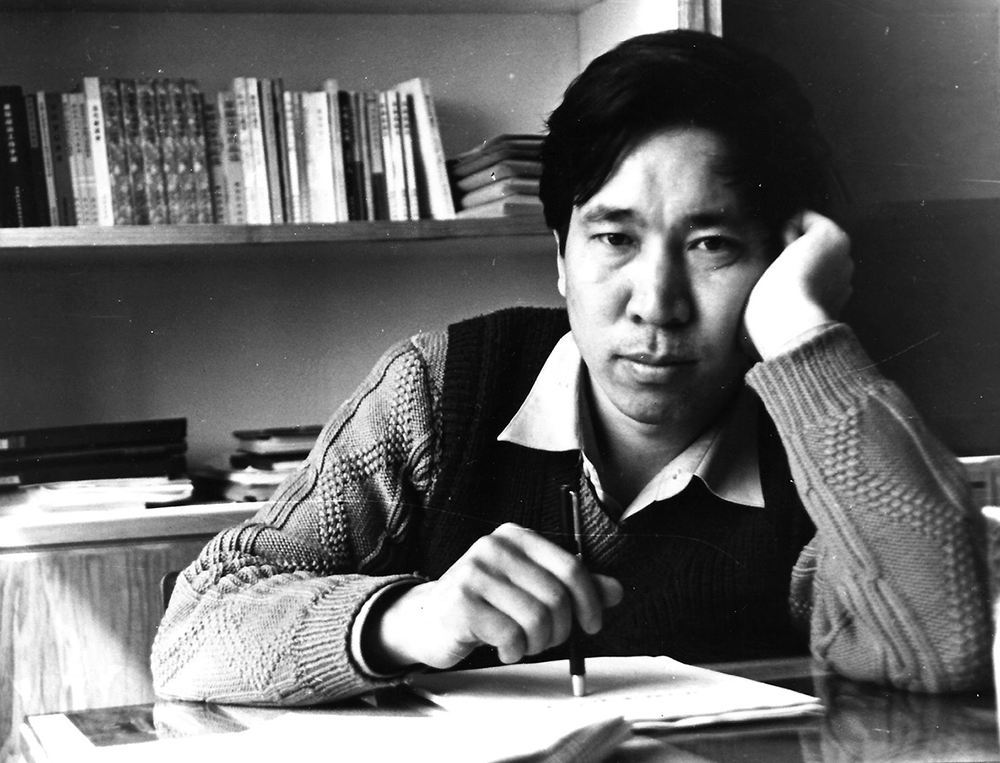
On a Sunday afternoon in late July 1970, John Berryman gave a reading of his poems in a small “people’s park” in Minneapolis near the west bank campus of the University of Minnesota. Following the reading, I reintroduced myself—we hadn’t seen each other since I was his student, eight years earlier—and we spent the afternoon in conversation at his house. He had had a very bad winter, he explained, and had spent much of the spring in the extended-care ward at St. Mary’s Hospital. I asked him about doing an interview. He agreed, and we set up an appointment for late October.
Berryman spent a week in Mexico at the end of the summer and had “a marvelous time.” A trip to upstate New York for a reading followed, and by early October he was back at St. Mary’s. It was there that the interview was conducted, during visiting hours on the twenty-seventh and twenty-ninth of October.
He looked much better than he had during the summer, was heavier and more steady on his feet. He again smoked and drank coffee almost continually. The room was spacious, and Berryman was quite at home in it. In addition to the single bed, it contained a tray table that extended over the bed, a chair, and two nightstands, one of which held a large AM-FM radio and the usual hospital accoutrements. Books and papers covered the other nightstand, the table, and the broad windowsill.
Berryman was usually slow to get going on an answer, as he made false starts looking for just the right words. Once he started talking, he would continue until he had exhausted the subject—thus, some of his answers are very long. This method left unasked questions, and the most important of these were mailed to him later for w ritten answers. In contrast to the taped answers, the written answers turned out to be brief, flat, and even dull. (These have been discarded.) By way of apology, he explained that he was again devoting his energies almost entirely to writing poetry.
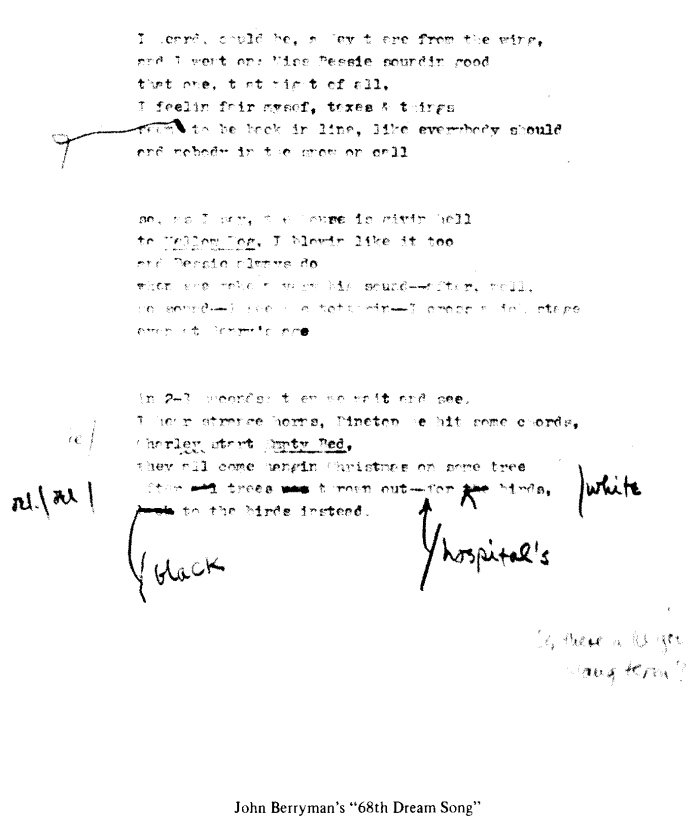
An edited typescript of the interview was sent him in January 1971. He returned it in March, having made very few changes. He did supply some annotations, and these have been left as he put them.
INTERVIEWER
Mr. Berryman, recognition came to you late in comparison with writers like Robert Lowell and Delmore Schwartz. What effect do you think fame has on a poet? Can this sort of success ruin a writer?
JOHN BERRYMAN
I don’t think there are any generalizations at all. If a writer gets hot early, then his work ought to become known early. If it doesn’t, he is in danger of feeling neglected. We take it that all young writers overestimate their work. It’s impossible not to—I mean if you recognized what shit you were writing, you wouldn’t write it. You have to believe in your stuff—every day has to be the new day on which the new poem may be it. Well, fame supports that feeling. It gives self-confidence, it gives a sense of an actual, contemporary audience, and so on. On the other hand, unless it is sustained, it can cause trouble—and it is very seldom sustained. If your first book is a smash, your second book gets kicked in the face, and your third book, and lots of people, like Delmore, can’t survive that disappointment. From that point of view, early fame is very dangerous indeed, and my situation, which was so painful to me for many years, was really in a way beneficial.
I overestimated myself, as it turned out, and felt bitter, bitterly neglected; but I had certain admirers, certain high judges on my side from the beginning, so that I had a certain amount of support. Moreover, I had a kind of indifference on my side—much as Joseph Conrad did. A reporter asked him once about reviews, and he said, “I don’t read my reviews. I measure them.” Now, until I was about thirty-five years old, I not only didn’t read my reviews, I didn’t measure them, I never even looked at them. That is so peculiar that close friends of mine wouldn’t believe me when I told them. I thought that was indifference, but now I’m convinced that it was just that I had no skin on—you know, I was afraid of being killed by some remark. Oversensitivity. But there was an element of indifference in it, and so the public indifference to my work was countered with a certain amount of genuine indifference on my part, which has been very helpful since I became a celebrity. Auden once said that the best situation for a poet is to be taken up early and held for a considerable time and then dropped after he has reached the level of indifference.
Something else is in my head; a remark of Father Hopkins to Bridges. Two completely unknown poets in their thirties—fully mature—Hopkins, one of the great poets of the century, and Bridges, awfully good. Hopkins with no audience and Bridges with thirty readers. He says, “Fame in itself is nothing. The only thing that matters is virtue. Jesus Christ is the only true literary critic. But,” he said, “from any lesser level or standard than that, we must recognize that fame is the true and appointed setting of men of genius.” That seems to me appropriate. This business about geniuses in neglected garrets is for the birds. The idea that a man is somehow no good just because he becomes very popular, like Frost, is nonsense, also. There are exceptions—Chatterton, Hopkins, of course, Rimbaud, you can think of various cases—but on the whole, men of genius were judged by their contemporaries very much as posterity judges them. So if I were talking to a young writer, I would recommend the cultivation of extreme indifference to both praise and blame because praise will lead you to vanity, and blame will lead you to self-pity, and both are bad for writers.
INTERVIEWER
What is your reaction to such comments as: “If Berryman is not America’s finest living poet, then he is surely running a close second to Lowell”?
BERRYMAN
Well, I don’t know. I don’t get any frisson of excitement back here, and my bank account remains the same, and my view of my work remains the same, and in general I can say that everything is much the same after that is over.
INTERVIEWER
It seems that you, along with Frost and several other American writers, were appreciated earlier in England than in America.
BERRYMAN
That’s true. More in Frost’s case. Stephen Crane is another.
INTERVIEWER
Why do you think this is true?
BERRYMAN
I wonder. The literary cultures are still very different. Right this minute, for example, the two best reviewers of poetry in English, and perhaps the only two to whom I have paid the slightest attention, are both Englishmen—Kermode and Alvarez. Of course, that’s just a special case—ten years ago it was different, but our people have died or stopped practicing criticism. We couldn’t put out a thing like the Times Literary Supplement. We just don’t have it. Education at the elite level is better in England, humanistic education—never mind technical education, where we are superior or at least equal—but Cambridge, Oxford, London, and now the red-brick universities provide a much higher percentage of intelligent readers in the population—the kind of people who listen to the Third Programme and read the Times Literary Supplement. They are rather compact and form a body of opinion from which the reviewers, both good and mediocre, don’t have to stand out very far. In our culture, we also, of course, have good readers, but not as high a percentage—and they are incredibly dispersed geographically. It makes a big difference.
INTERVIEWER
You, along with Lowell, Sylvia Plath, and several others, have been called a confessional poet. How do you react to that label?
BERRYMAN
With rage and contempt! Next question.
INTERVIEWER
Are the sonnets “confessional”?
BERRYMAN
Well, they’re about her and me. I don’t know. The word doesn’t mean anything. I understand the confessional to be a place where you go and talk with a priest. I personally haven’t been to confession since I was twelve years old.
INTERVIEWER
You once said: “I masquerade as a writer. Actually I am a scholar.” At another time you pointed out that your passport gives your occupation as “Author” and not “Teacher.” How do your roles as teacher and scholar affect your role as poet?
BERRYMAN
Very, very hard question. Housman is one of my heroes and always has been. He was a detestable and miserable man. Arrogant, unspeakably lonely, cruel, and so on, but an absolutely marvelous minor poet, I think, and a great scholar. And I’m about equally interested in those two activities. In him they are perfectly distinct. You are dealing with an absolute schizophrenic. In me they seem closer together, but I just don’t know. Schwartz once asked me why it was that all my Shakespearean study had never showed up anywhere in my poetry, and I couldn’t answer the question. It was a piercing question because his early poems are really very much influenced by Shakespeare’s early plays. I seem to have been sort of untouched by Shakespeare, although I have had him in my mind since I was twenty years old.
INTERVIEWER
I don’t agree with that. One of the dream songs, one of those written to the memory of Delmore Schwartz—let me see if I can find it. Here, number 147. These lines:
Henry’s mind grew blacker the more he thought.
He looked onto the world like the act of an aged whore.
Delmore Delmore.
He flung to pieces and they hit the floor.
That sounds very Shakespearean to me.
BERRYMAN
That sounds like Troilus and Cressida, doesn’t it? One of my very favorite plays. I would call that Shakespearean. Not to praise it, though, only in description. I was half hysterical writing that song. It just burst onto the page. It took only as long to compose as it takes to write it down.
INTERVIEWER
Well, that covers scholarship. How about teaching? Does teaching only get in the way of your work as a poet?
BERRYMAN
It depends on the kind of teaching you do. If you teach creative writing, you get absolutely nothing out of it. Or English—what are you teaching? People you read twenty years ago. Maybe you pick up a little if you keep on preparing, but very few people keep on preparing. Everybody is lazy, and poets, in addition to being lazy, have another activity which is very demanding, so they tend to slight their teaching. But I give courses in the history of civilization, and when I first began teaching here I nearly went crazy. I was teaching Christian origins and the Middle Ages, and I had certain weak spots. I was OK with The Divine Comedy and certain other things, but I had an awful time of it. I worked it out once, and it took me nine hours to prepare a fifty-minute lecture. I have learned much more from giving these lecture courses than I ever learned at Columbia or Cambridge. It has forced me out into areas where I wouldn’t otherwise have been, and since I am a scholar, these things are connected. I make myself acquainted with the scholarship.
Suppose I’m lecturing on Augustine. My Latin is very rusty, but I’ll pay a certain amount of attention to the Latin text in the Loeb edition, with the English across the page. Then I’ll visit the library and consult five or six old and recent works on St. Augustine, who is a particular interest of mine, anyway. Now all that becomes part of your equipment for poetry, even for lyric poetry. The Bradstreet poem is a very learned poem. There is a lot of theology in it, there is a lot of theology in The Dream Songs. Anything is useful to a poet. Take observation of nature, of which I have absolutely none. It makes possible a world of moral observation for Frost or Hopkins. So scholarship and teaching are directly useful to my activity as a writer.
INTERVIEWER
But not the teaching of creative writing. You don’t think there is any value in that for you as a poet.
BERRYMAN
I enjoy it. Sometimes your kids prove awfully good. Snodgrass is well known now, and Bill Merwin—my students—and others, and it’s delightful to be of service to somebody. But most of them have very little talent, and you can’t overencourage them; that’s impossible. Many of my friends teach creative writing. I’m not putting it down, and it certainly is an honest way of earning a living, but I wouldn’t recommend it to a poet. It is better to teach history or classics or philosophy or the kind of work I do here in humanities.
INTERVIEWER
You have given Yeats and Auden as early influences on your poetry. What did you learn from them?
BERRYMAN
Practically everything I could then manipulate. On the other hand, they didn’t take me very far because by the time I was writing really well, in 1948—that’s the beginning of the Bradstreet poem and the last poems in the collection called The Dispossessed—there was no Yeats around and no Auden. Some influence from Rilke, some influence from a poet whom I now consider very bad, Louis Aragon, in a book called Crèvecoeur—he conned me. He took all his best stuff from Apollinaire, whom I hadn’t then read, and swept me off my feet. I wrote a poem called “Narcissus Moving,” which is as much like Aragon as possible, and maybe it’s just as bad. I don’t know. Then the Bradstreet poem—it is not easy to see the literary ancestry of that poem. Who has been named? Hopkins. I don’t see that. Of course there are certain verbal practices, but on the whole, not. The stanza has been supposed to be derived from the stanza of “The Wreck of the Deutschland.” I don’t see that. I have never read “The Wreck of the Deutschland,” to tell you the truth, except the first stanza. Wonderful first stanza. But I really just couldn’t get onto it. It’s a set piece, and I don’t like set pieces. I’ll bet it’s no good—well, you know, not comparable with the great short poems. Then Lowell has been named. I see the influence of Lord Weary’s Castle in some of the later poems in The Dispossessed. There’s no doubt about it. In the Bradstreet poem, as I seized inspiration from Augie March, I sort of seized inspiration, I think, from Lowell, rather than imitated him. I can’t think, offhand—I haven’t read it in many years—of a single passage in the Bradstreet poem which distinctly sounds like Lowell. However, I may be quite wrong about this since people have named him. Other people? I don’t think so.
INTERVIEWER
How about Eliot? You must have had to reckon with Eliot in one way or another, positively or negatively.
BERRYMAN
My relationship with Eliot was highly ambiguous. In the first place, I refused to meet him on three occasions in England, and I think I mentioned this in one of the poems I wrote last spring. I had to fight shy of Eliot. There was a certain amount of hostility in it, too. I only began to appreciate Eliot much later, after I was secure in my own style. I now rate him very high. I think he is one of the greatest poets who ever lived. Only sporadically good. What he would do—he would collect himself and write a masterpiece, then relax for several years writing prose, earning a living, and so forth; then he’d collect himself and write another masterpiece, very different from the first, and so on. He did this about five times, and after the Four Quartets he lived on for twenty years. Wrote absolutely nothing. It’s a very strange career. Very—a pure system of spasms. My career is like that. It is horribly like that. But I feel deep sympathy, admiration, and even love for Eliot over all the recent decades.
INTERVIEWER
You knew Dylan Thomas pretty well, didn’t you?
BERRYMAN
Pretty well, pretty well. We weren’t close friends.
INTERVIEWER
Any influence there?
BERRYMAN
No. And that’s surprising, very surprising, because we used to knock around in Cambridge and London. We didn’t discuss our poetry much. He was far ahead of me. Occasionally he’d show me a poem, or I’d show him a poem. He was very fond of making suggestions. He didn’t like a line in a poem of mine, later published by Robert Penn Warren in The Southern Review, called “Night and the City”—a very bad poem modeled on a poem by John Peale Bishop called “The Return.” Well, Dylan didn’t like one line, and so he proposed this line: “A bare octagonal ballet for penance.” Now, my poem was rather incoherent, but couldn’t contain—you know, in the military sense—it couldn’t contain that! I was very fond of him. I loved him, and I thought he was a master. I was wrong about that. He was not a master; he became a master only much later on. What he was then was a great rhetorician. Terrific. But the really great poems only came towards the end of World War II, I think. There was no influence.