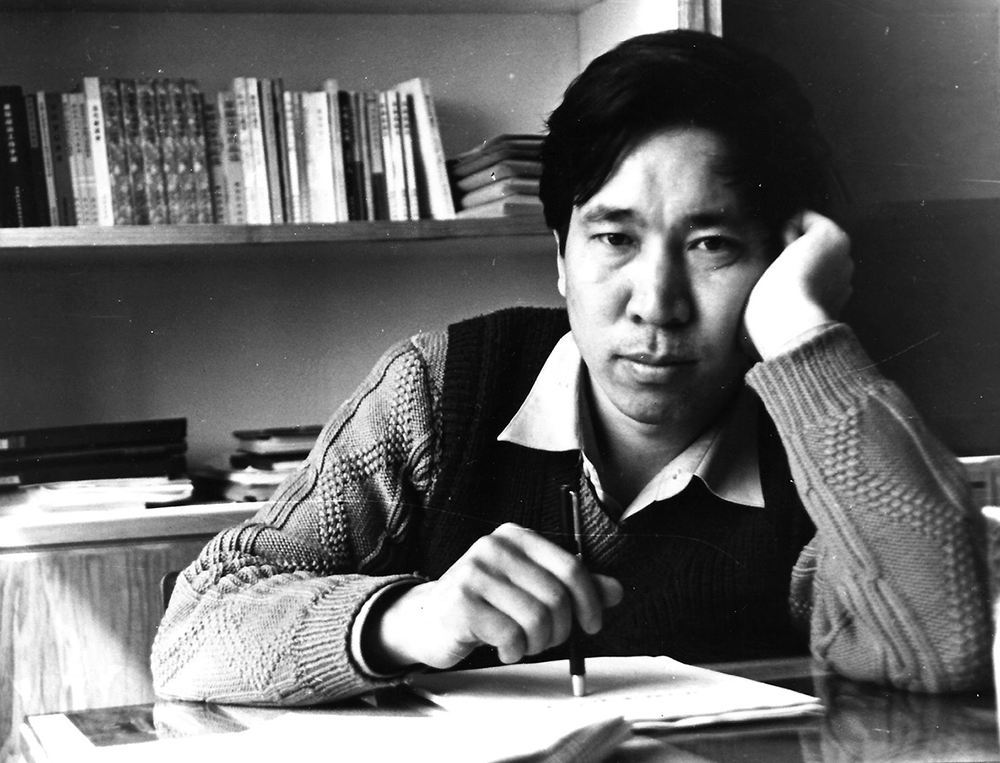
This fall, two editors of The Paris Review—John Jeremiah Sullivan and the undersigned—were invited to Oslo to take part in the first annual Norwegian-American Literary Festival. This was the brainchild of Frode Saugestad, a sometime DJ, musician, Diesel franchise manager, extreme athlete, and competitive chain-saw operator who recently completed a teaching fellowship in comparative literature at Harvard. His idea was to give Norwegians an introduction to current trends in American writing. Our fellow panelists were Donald Antrim, Elif Batuman, Graywolf publisher Fiona McCrae, the Norwegian filmmaker Joachim Trier, Lucas Wittmann of The Daily Beast, and New Yorker book critic James Wood.
Our talks took place over three days, mainly at the Litteraturhuset in central Oslo, a café and writers’ loft across the street from the royal palace. The one exception was an hour-long public lecture on the novelist Knut Hamsun, delivered by Wood at the invitation of Hamsun’s publishing house Gyldendal. As a group, we urged Wood to decline the honor (one of us compared him to a Norwegian lecturing on Mark Twain at the Mark Twain Center, in Hannibal, Mo., without any grasp of English). In the event, he drew a standing-room-only crowd. When he concluded, several Norwegians were heard to yell bravo.
The NALF lacked many of the usual trappings of a literary conference. There was no Web site and no printed program. There were no name tags. The entire promotional budget seems to have been spent on a stack of postcards. It is not clear to whom these were sent. There was no theme. The audience was made up as much of students and the merely curious as of professional writers. Yet their close attention unlocked several lively discussions on the arts of cinema and writing. I am grateful to Trier, Batuman, Sullivan, and Antrim, and to Saugestad, for letting us publish them here.
Lorin Stein
On Literature and Film
Joachim Trier is the director of two feature films: Reprise (2006) and Oslo, August 31st (2011). These have received honors at Toronto, Milan, Cannes, and other festivals and have made Trier, at thirty-eight, one of the most celebrated independent filmmakers of his generation.
INTERVIEWER
Reprise is the best movie I’ve seen about young writers today. What inspired you to make your first film about two novelists?
TRIER
I’ve always admired writers, maybe because I feel that I’m not a good writer myself. I always write with my good friend Eskil Vogt, who is much better on the page. So I feel honored, but also slightly nervous, to be talking about a movie with literary people. Mind you, this may be a Norwegian thing. In Norway we have a great tradition of writing literature, whereas cinema ... historically this is not our strength. A Norwegian friend of mine interviewed Don DeLillo and asked him, “What do American writers talk about when they hang out casually?” DeLillo said, “We talk about movies.” I felt so proud!
When Eskil and I began writing Reprise, I was finishing my studies in London at the National Film and Television School. I had been making short films that were more formally oriented and less about character and psychology, drama, relationships, stuff like that. Eskil and I were hesitant to admit that this would be our first feature. It was too close to our lives. It was about people we knew, it was about the cultural specifics of an environment that we’d grown up in. Also, someone had said to me, “Don’t start out your career by making your version of 8 1/2.” The self-portrait of the artist—it’s risky territory.
INTERVIEWER
So Reprise is a self-portrait?
TRIER
Well, to us it’s kind of shameful to make a film that’s too close to home, so we transferred the story onto writers rather than filmmakers and based it on writers we knew. This gave us a way to tell a story about ambition and friendship. There was also a fanboy quality that we wanted to capture. I felt at the time that there were a lot of good movies about boys and girls. I wanted to make a film about guys who are friends. Writing with Eskil, we could lean on our own friendship and draw on that as we were working.
INTERVIEWER
How do you and Mr. Vogt divide up the work of writing?
TRIER
At the beginning, and especially when working on Reprise, Eskil and I would sit and write continuously together, and I was always slower than he was, and he always had to rewrite my stuff anyway. Now we’ve found our balance, I think. When we made Oslo, August 31st, we structured the film together, we discussed the content of the scenes, then Eskil wrote them. Then I would read them, and edit and add to the dialogue. Often we’ll go back and forth on one scene four or five times in a single day.
INTERVIEWER
Some of the most revealing moments in your films happen without dialogue. For example, in Oslo, there’s a moment Anders—the main character, played by Anders Danielsen Lie—has just said good-bye to his friend Thomas. And he puts his hands in his pockets and just raises his chin in that Obama-esque way he has. Tears spring to your eyes. And nothing has happened! Did you write the script knowing that moment would be a turning point?
TRIER
If we are clear thematically in the script, then I find that we are not smart enough not to repeat ourselves. So you might have several places where you want some turning point, some emotion to happen. Then when you edit, you sift out the repetitions.
You see, I look at a script as a working tool. It’s got to be an okay read so that people will want to get involved with it, but in the end it’s just a tool. Like a partiture in music. The actors change the pacing, and then you edit the film and you change it again. How the emotions are preserved is a strange mystery to me. I have never figured it out. Often the feeling ends up very much the same, but it always has to go on a big detour, which you can’t foresee. The script is only a starting point.
There’s an anecdote I love. Samuel Fuller wanted to shoot a film with an arguing couple, and he’s out at this farm, and while they’re waiting to set up the next shot he discovers a chicken out in the yard chasing a cat around in circles. He sees this and says to his cinematographer, This is the perfect metaphor for the arguing going on inside—we shoot this, then we pull back into the room and see the actors. They do it and it’s perfect. And if you’d written that in the script, the producers would have said, We’ve got to train a chicken to chase a cat? That’s going to be expensive.
INTERVIEWER
And possibly cheesy.
TRIER
Exactly. Sometimes seeing is believing—a moment that seems too obvious in writing only works when you actually see it. My motto is always “Luck favors the well prepared.” If it rains when you need the sun, you’ve got to deal with it. You wanted the melancholy of a Terrence Malick magic hour, so how will you express that with a gray sky and rain? Sometimes you’re fortunate and it works out, sometimes not.
With Reprise the wonderful seasonal changes in Norway were an advantage. Here’s another example of a happy accident. When you have a film with many temporal layers, it’s kind of embarrassing that they all happen at the same time of year. The viewer thinks, Why do these guys relive all of their memories in the summertime? It’s an embarrassing thing. So we had this one moment when the two guys, Erik and Phillip, are kind of stalking the old writer, Sten Egil Dahl, the recluse. And one day he comes out of the house, and they chase him around Frogner Park, which you should go and see—it’s a wonderful park. The day we were shooting that scene it suddenly started snowing in the morning. So we got that flashback with snow. The next day we were back in the more linear part of the story in present-day autumn, and the snow was gone. That’s Norwegian weather. It’s painful to live with but okay to shoot in.
INTERVIEWER
Some American viewers associated that scene with a scene in the novel The Savage Detectives, where two young poets stalk Octavio Paz in a park. I imagine that’s coincidental.
TRIER
It is. I’m aware of the book, but I haven’t read it. You know what’s funny about this made-up writer, Sten Egil Dahl? We created a backstory for him in a documentary style that we hoped would look half-believable, and at the premier of the film a Polish journalist told us how happy he was that we had included Sten Egil Dahl, whom he so admired. He thought he had read some of his books. In a perverse way I found that very satisfying. We had added to the canon, so to speak.
INTERVIEWER
When I first saw Reprise, I remember thinking that I had never seen a movie dramatize depression quite the way you managed to do—depression and the charisma that a certain kind of brilliant depressed person can have. Mr. Lie’s performance was riveting. In Oslo you cast the same actor, not in a similar role, exactly, but in a similar predicament.
TRIER
Eskil and I wrote Oslo for Anders. I felt that he’d grown older, and that something had happened to him, that he was ready to show more of his abilities. It seemed to me that there was even more texture and subtlety to his performance in Oslo.
INTERVIEWER
Even my sister agreed. She’s a much tougher critic than I am. We were both nervous that the second time round you would screw up.
TRIER
So was I! No doubt some people think I did. These things are very subjective. At the outset I thought the two movies would be very different, because Anders was the only thing they had in common. I said, It’s not going to be about different time layers, it’s going to be about one day. It’s going to be linear, focusing on one character only this time.
The thing is, you’re not able to change yourself. I thought I was making a different movie and people keep pointing out that, structurally, there are a lot of similarities. And the same themes. You’re always biting yourself in the ass.
INTERVIEWER
In one scene, the sound track is made up entirely of overheard conversations. Did you plan that from the beginning?
TRIER
This is a part of the script where we were hoping for happy accidents. Parts of the sound track are simple documentary, parts are slightly improvised, some of it is completely scripted. In that scene there’s a girl who reads out forty things she wants to do before she dies. A bucket list, I think you call it in America. What happened is, I was listening to the radio and I heard a story about a girl who had made one of these lists. The reporter had discovered that these lists show up on the Internet a lot at the moment, all around the world, thousands of them. And one of the things that is repeated in all these lists is the wish to swim with dolphins. I just thought that was sweet. I thought we should call the film Swimming with Dolphins. I was thinking about this dark, intellectually tough guy sitting there listening to this—
INTERVIEWER
Cheesy, chicken-chasing-a-cat bucket list.
TRIER
There you go! So we got in touch with the girl, and she gave us the list. I wouldn’t have been able to write it myself. I would have started structuring, trying to be smart, trying to put in something allegorical. As I was shooting, I kept thinking, What the hell? Am I making children’s television or are we doing something of interest? I had no clue.
INTERVIEWER
You’re going to make your next movie in the States. I’m worried that we’re going to cramp your style.
TRIER
So am I. I’m always worried. I’m tremendously anxious whenever I do any work. And I’m interested in cultural specifics, so having grown up on Philip Roth and Woody Allen—and being one-sixteenth Jewish, believe it or not, somewhere back in my Danish ancestry—I’m taking a frightening leap.
INTERVIEWER
Will the movie be based on a book?
TRIER
No, it’s not, but I think of it as literary, perhaps because it’s a family drama and structured around a lot of different characters. It’s called Louder Than Bombs. Everyone thinks this is a reference to the Smiths album, which it is, but it’s also a quotation from Elizabeth Smart, the poet. From By Grand Central Station I Sat Down and Wept, which is a wonderful poem.
INTERVIEWER
“Louder than bombs” comes from By Grand Central Station I Sat Down and Wept?
TRIER
Morrissey loved that poem.
INTERVIEWER
For our Norwegian friends, By Grand Central Station I Sat Down and Wept is a book-length prose poem. It has to be one of the more operatic books of the last century.
TRIER
Now you know what I read. But actually, this question of literariness is something I think a lot about. The vocabulary of cinema, at least mainstream cinema, hasn’t changed tremendously since the time of D. W. Griffith, especially not when compared to the experiments of, let’s say, Faulkner, Woolf, or Joyce. And yet if you look at how the French nouveau roman influenced French movies—I’m thinking of Hiroshima Mon Amour, written by Marguerite Duras, or Last Year at Marienbad—you see how the novel actually opens up space for cinema, so that it can be, paradoxically, even more cinematic.
I’ll give you an example. You’re not supposed to use voice-overs. It’s considered bad form—
INTERVIEWER
Because it’s old-fashioned?
TRIER
Because it moves away from the theatrical tradition. You are supposed to use action and dialogue to tell your story. But if you look at the way Terrence Malick uses voice-over, it very often liberates the images to do something else. The images are not enslaved, for lack of a better expression, by narrativity in the classical sense. Thanks to voice-over, the images can be something other than just plot or story. The film opens up to something that could be beautiful, tactile, phenomenological, an observation of the world, a different kind of narrative.
INTERVIEWER
What’s another technique you think of as being “literary”?
TRIER
In cinema you have a famous dichotomy between continual time and space—when you film something with no cuts—and montage, when images are put together in some kind of suggestive way. In a Hollywood movie, you see a young couple drinking, laughing, kissing, and you feel that, between these images, you experienced the whole evening. So these two methods are very often contrasted, and virtuous film craft is supposed to lean on the continuation of time and space, not on montage.
But to me there’s something interesting about montage, about jumping between different times and places. Literature does this seamlessly. Think of Proust. The narrator may think of this or that, which will make him think of his aunt when he was little, and then we come back to the present day—it doesn’t matter, you just follow the voice.
I think montage can do something similar in movies. Now, I’m talking about my ambitions. I’m not saying this is something I’ve achieved. But Eskil and I have spent a lot of time discussing these things. In Reprise, we’ll follow a train of thought the way you sometimes see in comedies—in Sex and the City, for example. Let’s say Carrie Bradshaw refers in a voice-over to something she did last week—she met someone on a street corner—and suddenly we’re at the street corner. Woody Allen does this a lot. In Hannah and Her Sisters or Annie Hall, he does it very cleverly but almost always in comedic ways.
But why not use montage in a more serious way, to get inside and show the thoughts of your characters? In Reprise, when Erik is going to break up with his girlfriend, he thinks of his mother and pornography. He thinks about going to the Steiner School [laughter from audience], which some of you probably went to as well. All these things about guilt, they’re thrown in there as montage elements, and then he ends up not being able to break up with his girlfriend, Lillian. A sequence like that is tricky. When people read that in a script, they say, That’s confusing. They say, I’ll be taken out of the film. Which is the biggest crime in the world. So it’s tricky stuff, whereas in literature it’s just obvious. It’s what you do all the time.
INTERVIEWER
And we never see Lillian’s face. Not until—
TRIER
Not until the end. She surprised you, at least I hope so.
INTERVIEWER
Indeed. In your movies, you teach us to notice the beauty of the characters—men and women both—in an unusually “realistic” way. Their beauty often surprises us. For example, when the editor, Johanne, strips down to her bathing suit, it’s not a nudge-nudge hubba-hubba moment. You don’t play it for laughs, still the audience thinks, Holy mackerel.
TRIER
There is shame about looking at beauty, I think, at least in the Protestant culture of Norway. If something is beautiful, it’s called refinement, ornament.
INTERVIEWER
Oslo begins with a very tender montage of the city, only tangentially related to the story. I wonder what you wanted to conjure about this place.
TRIER
I used to feel ashamed about being too navel-gazing and too subjective. Now I’ve learned to say fuck it. If you want to add to some larger tradition, your own experience is what you have to bring. In these movies Oslo is something that I care about, that I see, that I want to show.
Mind you, I come from a skateboarding background. For us every part of the city was named for some curb or staircase. Then sometimes those places would disappear. Like the CC Bank—the old supermarket Cash & Carry had a wonderful loading dock, like a bank, we could jump off. Then suddenly it was gone. But I filmed it. I have it on tape. It existed. It was there. We were there. I have friends here tonight who skated that spot with me, and this sounds trite and banal and nostalgic, but to us that mattered. When you’re filming your own city, you can, on a very basic level, document stuff. I can document that café across the road. I’m almost ashamed to go there now because the people there know I made that film. Now I’m the guy who made the movie. Still, there’s something satisfying about that documentation, in itself.
AUDIENCE
You adapted Oslo from a book, Le feu follet, the same one that Louis Malle adapted in The Fire Within. What attracted you to that book?
TRIER
Something thematic, something about the characters—that’s what attracts me. Reprise was loosely based on a Henry James novella called The Lesson of the Master. Please laugh. It sounds very pretentious. As the film is today, it has nothing to do with that short story. But Henry James is wonderful when he writes about the dilemma of writers choosing between the bourgeois life of family and their commitment to the free life of the artist. Now, how many people do I know who smoke pot and go to Berlin to write a novel and come back with nothing, and talk about how “free” they were. It’s such a cliché, but that novella treats the cliché with great complexity.
INTERVIEWER
Can you say what part was the germ of Reprise?
TRIER
In most of James’s short fiction, right at the end, when you think you know where the story is leading, he takes things in a last, unexpected direction. You see it in “The Beast in the Jungle” and The Aspern Papers, and a lot of the others. By the end of The Lesson of the Master, James leaves you with a sense of an impossible choice, and yet the story has reached a dramatic conclusion. That ending shows the continuing doubt of the writer bumping up against the complexity of love. To me it has great authority. It’s sort of like Vertigo—you have a conclusion that makes sense, but the dilemma, the feeling, lingers on.
But to go back to the earlier question, with Le feu follet what inspired me is probably the main character and the theme, rather than the narrative. In general, you take a theme or a concept and use it as a Dumbo feather. You know, Dumbo can fly when he has that feather—and even when he loses it, he may be able to keep flying. He just needs help taking off.
On False Starts
A scholar of Russian literature by training, Elif Batuman began a second career as a reporter and essayist in the first issues of N+1 in 2005. Since then she has become a staff writer at The New Yorker. Her essays were collected in The Possessed: Adventures with Russian Books and the People Who Read Them.
John Jeremiah Sullivan is Southern editor of The Paris Review. He is a contributing writer at The New York Times Magazine and has published two books: Blood Horses: Notes of a Sportswriter’s Son and the collection Pulphead. His essay “Mister Lytle” won The Paris Review a National Magazine Award in 2011.
INTERVIEWER
I’ve seen each of you report a story—then take months, or even years, to actually write it. Why does that happen?
BATUMAN
It happens because life tends to just hand you a big pile of stuff, and often it isn’t obvious what the story is. I think it’s true that we experience our lives in terms of narrative, and certain elements of a story, certain questions or juxtapositions or moods, are already basically there in the experience. But it can be really hard to organize those elements and to decide what kind of meaning you want to give them.
For example, when I was a graduate student, I went to a Russian literature conference at Tolstoy’s house in Yasnaya Polyana, near Tula. We were presenting papers in the house where Tolstoy wrote Anna Karenina and War and Peace and where he led this psychically, psychotically intense life, with the disciples and his marriage and the peasants. On the last day of the conference, we took a field trip to Chekhov’s house, just randomly, because it was on the way back to Moscow. That was the whole week.
I wanted to write about it, but it took me ages to find the story. I knew it involved the question of what you learn when you go to a writer’s house. I mean, you do learn something, right? The table next to Tolstoy’s bed, in Tolstoy’s house, clearly has a closer relationship to Tolstoy than this table [points to table], which Tolstoy never saw. But what is that relationship, and what do I learn from seeing the table?
The place I eventually found the story was actually in the application for the grant to get the money to go to the conference. There were two kinds of grants you could apply for—one was for presenting a paper, which was what I was actually doing, and the other was for field research. The field-research grant was more money, so when I was applying, I started asking myself, What’s a question you can only answer by going to Tolstoy’s house? One night I was watching The Daily Show, and there was a segment about someone doing a CT scan of King Tut’s mummy to determine his cause of death. Jon Stewart was like, “Did King Tut die of natural causes?”— and then he turned around with a flashlight under his chin and said, “Or was he ... murdered?” That was when I started wondering, Did Tolstoy die of natural causes—or was he ... murdered? It was a joke at first, and I didn’t have any plan to write about it. But the whole time I was there, part of me was looking for clues. And the thing is, when you look at anyone’s life—
INTERVIEWER
May I interrupt, just for one quick moment? Could you remind us how old Tolstoy was when he died?
BATUMAN
Eighty-two.
INTERVIEWER
I’m sorry. You were saying?
BATUMAN
Well, the murder mystery turns out to be a really useful frame for a literary conference at Tolstoy’s house. The situation is similar—you’re in a country house full of stuff belonging to a dead man, and you have to figure out from that stuff who he really was. Your observations aren’t just random anymore. Now they’re clues.
It was after I started thinking about Sherlock Holmes that Chekhov finally fit into the picture, instead of being some weird detour. It suddenly seemed really obvious to me that Chekhov was Dr. Watson—the doctor next door, the admiring apprentice, the rationalist who’s always on the wrong track, the one who fights death but always loses. In any case, having the model of a detective story informed what I could put in and what I could leave out of the piece.
INTERVIEWER
How long did this take to write?
BATUMAN
I went to the conference in 2005 and the piece came out in 2009.
INTERVIEWER
So it took you three or four years to figure out—even though, looking back, it was as if you had come up with this ridiculous proposal in order to write the piece. John, can you top that?
SULLIVAN
I can’t top that. I can extract something from it, though. Elif just said, What is the question that can only be answered in Tolstoy’s house? That’s a perfect example of what nonfiction has to do if it’s going to work. It has to find a task for itself, it’s always prosecuting a task of some kind. A lot of its power comes from that, because where you have a task, you have a story. Do you want the answer to a question, to find out how something works or what happened on a specific day? Then already, just in your moving from a state of greater to lesser ignorance, there’s an implication of narrative, chronology, conflict, everything you need. People talk about the importance of curiosity or obsession in good nonfiction, but you can’t just let it sit there on the page and circulate. It has to be moving, has to itself be feeling the pull of the task.
INTERVIEWER
Can you remember a time when you went off and reported without knowing what the task was?
SULLIVAN
I don’t have to look further than what’s in front of me right now, the article I was supposed to turn in last night. I had an assignment to go to Cuba and write about the changes under Raúl Castro, the new leader of Cuba. But I had another task happening: my wife and six-year-old daughter were with me. My wife is Cuban American, so the six-year-old was going to meet her Cuban relatives for the first time, and in some cases—because they’re old—probably for the only time. Going into the assignment, I thought of all that as something that was just happening incidentally. I was there to get the Story. So I did tons of reading and a few interviews with the kind of likely characters you’d interview for a piece like that. We got home from Cuba, and I had this mass of stuff, this shapeless mass—and it’s like that game where somebody holds a bunch of threads, and they all look the same length, but one of them is going to come all the way out when you pull it. There’s one thread that’s going to take you all the way through to the end of the piece, and for me it often takes false starts and mistaken choices to find it. In this case I had to accept that the stuff I saw in connection with the family trip was more interesting, or at least was the thing that really interested me. It had given me access to more revealing moments and images, concerning what’s happening in Cuba, than a bunch of interviews with Party officials could do. Or so I felt.
INTERVIEWER
Can you give an example?
SULLIVAN
Meeting with my wife’s family in this small town where they live, in the interior of the island, and listening to them talk. Drinking and smoking with them, frankly. I’ve been there three times now and every time there’s a bottle of Havana Club and some cigars when I walk into the house. They start hustling to get these things as soon as they hear we’re coming, and it takes months. But the reason I bring it up is that they talk to me in a candid way about how difficult and, in some respects, awful things are there. It gets dark, and it gets sad, and I kept thinking, This beats the crap out of anything I’ll get from the government. We were outside the zone of political rhetoric, pro-Cuba or anti-. It didn’t matter—we were where people live. But it’s funny, I didn’t want the essay to go there, partly because I’m tired of using myself as material. I was hoping to get out of the first person, to just have an empirical experience and not think of it as material. A casualty of constantly cannibalizing your life for a living is that you’re always fouling the nest, the boundaries blur. But the piece didn’t care. It wanted me to tell the family story.
INTERVIEWER
John mentioned false starts. Elif, do you make fewer of those, as you gain experience? Why does a writer make false starts in the first place?
BATUMAN
I wish I knew. My editor at The New Yorker was like, Why don’t you just skip the whole part where you do all the wrong things and just do the right thing?
SULLIVAN
Thank you. Thank you, editor.
BATUMAN
And then he was like, Of course I’m just joking. He wasn’t joking! I don’t think I make fewer false starts now than I did before. Maybe I get faster at recognizing them.
INTERVIEWER
How do you recognize a false start? Does it give you a particular feeling?
BATUMAN
Yeah, but not right away. I think any start has to be a false start because really there’s no way to start. You just have to force yourself to sit down and turn off the quality censor. And you have to keep the censor off, or you start second-guessing every other sentence. Sometimes the suspicion of a possible false start comes through, and you have to suppress it to keep writing. But it gets more persistent. And the moment you know it’s really a false start is when you start . . . it’s hard to put into words.
SULLIVAN
When you start pushing it forward?
BATUMAN
Exactly! When you start pushing.
SULLIVAN
And you feel the slight exertion, like your tires just hit sand.
BATUMAN
And you have some line of dialogue that doesn’t look as funny as you thought it would, so you try to add something funny after it. That’s always bad.
SULLIVAN
Only, just as your realizing it’s a false start, you’re also realizing it has some really good writing in it. Maybe even, like, some of the best writing you’re going to do—
BATUMAN
In your whole life!
SULLIVAN
So you keep going, but it’s already a phantom thing at that point. You know nobody’s ever going to see the stuff, but you have to write through it. You’re just trying to satisfy some grim, barren mandate. There’s probably a German word for that.
INTERVIEWER
How about the long threads—the useful starts? Do they tend to have anything in common?
SULLIVAN
A lot of times it’s humiliating, because the long thread ends up being the simplest way in—what to another person might have seemed the most obvious thing to do. What a child would have seen. But as a writer you must first chop through all kinds of illusions you had about how the piece would go, aggrandizing visions of what it would be.
BATUMAN
It is humiliating. When I was in graduate school, I went to Samarkand, in Uzbekistan, for two months to prepare for a job that, for bureaucratic reasons, it then turned out I was not legally qualified for. So for two months I was in Samarkand learning the Uzbek language for no reason, and that was an experience I did nothing with for years and years. I’d been taking notes the whole time, because it was super interesting. But it was also really hot and difficult and painful. It’s hard to learn the Uzbek language in two months! There was a lot of pressure because I was the only student in the whole program, so all of my classes were one-on-one, with teachers who were looking me in the eyes the whole time like, You’re it. Anyway, the story turned out to be about being somewhere for two months for no reason, which is so like life.
SULLIVAN
You’d been trying to figure out how to fight off the pointlessness of it, and that turned out to be the story. Your task was to capture the feeling of no task.
Elif, have you noticed that it helps, and is hard, to stay mindful of the—I’ve never tried to articulate this before, so it’ll sound abstruse—the materiality of a piece? The fact that, in the end, it is going to be made of language, of words and sentences, and even paper?
BATUMAN
Yes! Every single time, there’s a moment when you realize it’s going to be made of words, and you think, Can’t I just remember that for next time?
SULLIVAN
Right? You’ll be typing away and—
INTERVIEWER
Excuse me. Could one of you explain what you’re talking about?
SULLIVAN
In the beginning, a piece doesn’t seem to be made of sentences and pages, it seems to be made of colors and textures and thought clouds, and you’re running around in a field, manipulating tones. You might be thinking of a character’s dialogue, for instance. But at first, you’re not quite hearing the sequence of syllables, the thing itself. You’re receiving the meaning they’re meant to convey, pure and without ambiguity, on a totally different sensory channel, like ants communicating chemically or something—
BATUMAN
And then you’re like, Oh wait, yet again, it’s just going to be a pile of words. Just like it was last time.
INTERVIEWER
I want to ask about a specific article that John published recently in The New York Times Magazine, about the tennis stars Serena and Venus Williams. As I understand it, John, you had only a few hours with each of the Williams sisters, but everyone who read the article noticed how at ease they seemed to be answering your questions. So I wonder, if it takes so long to figure out the story, how do you get your subjects on board in such a little space of time?
SULLIVAN
Often you can’t, and that’s one of the reasons this kind of piece has waned in quality, a decline from which I by no means absolve myself. The New Yorker is one of the only magazines that can still do it right on a regular basis, or that even tries. That has to do, partly, with the political economy of the thing, the way The New Yorker can leverage what it has to offer, a career-enhancing profile in exchange for a lot of someone’s time. Not many magazines can do that anymore. The subject tends to feel like, Why should I give you access to my deeper self, why should I expose that part of myself to your judgment? And there’s rarely a good answer.
In this case I had a feeling, setting out, that we were probably not going to get Venus and Serena until the very end, and indeed the interview with Venus happened four days before the piece had to go off to the printer, which was just gut-wrenching. But because I knew it was probably going to happen that way, I started doing tons of reading and video watching, making a lot of phone calls to other family members and people who’d known them. Not even to use, necessarily, but so that I would have real questions—things I needed to know—when I got in the room with the sisters. And subjects do respond to that, to the depth of your questions, even subjects who aren’t particularly deep themselves, which doesn’t apply to the Williams sisters—their self-actualization, which seemed fairly hard-won, was one of the most surprising and compelling things about them. We can sense in a primate way when there’s actual urgency beyond somebody’s question. I was coming to them and saying, I’m deeply fascinated by your family. I don’t think they’ve ever been written about in a satisfying way, and I need you to tell me this stuff. What is real? What really happened? To the extent that it wasn’t luck—which I’m not sure is not a very great extent—it was because of that.
BATUMAN
I always feel a sense of belatedness with reporting. As you’re writing, you realize more and more what the story is, and at the end I always wish I could go back and report that story, now that I know what it is. That’s why I like fact-checking, actually, because you get a second shot. You can ask a few more questions.
SULLIVAN
Fact-checking is underrated as a tool of writing itself.
INTERVIEWER
[To the audience] In Norway, is the fact-checker a fact of magazine life?
AUDIENCE
We don’t check facts.
INTERVIEWER
You are a truth-telling people. Maybe Elif or John can explain what a fact-checker is.
BATUMAN
It’s someone who gets on the phone and calls every single person you spoke to and verifies every word that you wrote.
SULLIVAN
A good fact-checker has learned how to mistrust sentences that seem beyond doubt, that look obviously, unassailably true and factual. The fact-checker is trained to go, Really? It’s your better brain. The New Yorker, where Elif writes, has a famously rigorous and passionate fact-checking department. They’ll go to cemeteries to check the spelling of somebody’s name on a tombstone. This does something to the way you read the magazine, and to the magazine itself. It charges the prose with a certain energy, because the reader can actually feel—in the carefulness of the diction, maybe?—different minds having worried about whether this was correct.
INTERVIEWER
Lately various writers have challenged the use of fact-checking, of factual accuracy, in nonfiction. They’ve asked, Why can’t there be nonfiction that doesn’t get the facts right?
SULLIVAN
My trouble with that whole discussion, as it’s happened in America over the last couple of years, is that it seems to take place so many levels of complexity below where the actual problems lie for a writer. The argument that nonfiction can never be purely nonfiction, can never get all the way to absolute factual accuracy, is of course totally solid. We could even have a separate conversation about whether a “fact” is anything but a social construct at the end of the day, since “facts” change. But the great nonfiction writers, or the ones whose work speaks most deeply to me, respond to that abyss of ambiguity with a determination to be as right as they can be, and not with a kind of prankish desire to push the ambiguity in the reader’s face, announcing as a discovery something that everyone already concedes. When you do that, you’re ripping the net right out of the tennis match, since nonfiction derives so much of its power—finds its task, to go back to that—in the striving toward fact.
INTERVIEWER
But there’s a long tradition of fudging stuff in nonfiction. You’re the one who made me read Defoe’s Journal of the Plague Year. If someone wants to write a nonfiction account that isn’t strictly accurate, what’s the problem?
SULLIVAN
Take the case of Ryszard KapuÅ›ciÅ„ski. It came out very late in his life that a lot of the stuff in his work, including in his masterpiece, The Emperor, had been invented. Okay, a person can say, he was an artist, he did that in the service of the story, or whatever. But when you go back to the book knowing these things, it simply is weaker. The reading experience itself has been diminished, not because the book is any less beautifully written, but because he’s put the reader in this very distracting situation of constantly having to guess whether he’s making it up, whether a particular sentence is true or “true.” I think that’s a cautionary tale.
AUDIENCE
How important is it to know that a story you’re reading is fiction or nonfiction?
BATUMAN
The Emperor example suggests that it’s important. It is interesting that the direction matters, too. If you read something thinking it’s true, and then find out it isn’t, you feel offended, but if you were to read something thinking it was fiction, and then found out it really happened, I don’t think you’d feel the same sense of letdown.
SULLIVAN
You’d think, How gutsy. You could have claimed it as real and you didn’t even do that. You didn’t even need to do that.
INTERVIEWER
A story we published in The Paris Review was submitted as nonfiction, but eventually the author, Kerry Howley, decided to invent a few very minor details and call the whole thing fiction.
BATUMAN
Why?
INTERVIEWER
Because she wanted to throw attention onto the voice. As soon as it was fiction, the reader concentrated on the person telling the story, and why she was telling the story. It created a mystery.
AUDIENCE
Do you think that the use of other media, like video and sound and photos, adds to or subtracts from a written piece?
BATUMAN
I was once writing for The New York Times Magazine about a seventy-year-old woman in Tel Aviv, the daughter of Max Brod’s secretary, who was maybe hoarding some unpublished manuscripts by Kafka in her dead mother’s apartment, together with more than a hundred cats. The thing that everyone kept telling me about this woman was, She used to be a great beauty, she used to be a great beauty. I was like, Okay, so she was a great beauty. Then the photographer, an Israeli guy, somehow talked her into giving him an old photo—I think she was wearing a flight attendant’s uniform in it—and I saw it for the first time in the magazine. And she was a great beauty.
SULLIVAN
So that sentence you had written—
BATUMAN
The sentence became true.
On the Fantastical
Donald Antrim is the author of three novels—Elect Mr. Robinson for a Better World, The Hundred Brothers, and The Verificationist—and a memoir, The Afterlife. He published his first story in The Paris Review in 1993 and has since become a frequent contributor to The New Yorker. Antrim’s work has yet to be translated into Norwegian.
INTERVIEWER
You’ve written three novels that are often described as “fantastical,” but over the past few years you’ve been publishing stories in The New Yorker that are, for lack of a better word, realistic. I’d like to discuss this evolution in your work, but since the books aren’t available in Norway, maybe you could begin by describing them.
ANTRIM
It seems strange to talk without the books here—no one’s read them. Can I take a minute to give some context? Would that be all right?
I could begin by saying that, many years ago, when I began writing in earnest, I wrote stories, story after story, that were modeled on the kind of stories I thought I should write. The stories were about my family, mainly, about my alcoholic mother and about being her son, but they weren’t succeeding. They were dutifully written, and they failed. They were dead. And later on, right around the time I was thirty or so—because I started late—I went into a depression over this. I didn’t know what to do. I got out of the funk, eventually, through the fantastic, through making up other worlds. I felt at the time that since no one was paying me to write, since my family didn’t want me to write, I had to have pleasure in writing.
[To the audience] It’s difficult for me to say, in response to Lorin’s question, what I think the novels are about. For me, they are maybe about the experience and the pleasure of writing them. It took me a while to understand that in building another world through the fantastic I was making a set of rules that had to be observed, a logic that had to be carried through—that I was in some ways obeying the premise of the very opening line, and that each book would make itself out of itself as time went on. It’s a fairly slow process. The books are not long. For me, content—the premise itself, the subject matter of the books—is less important than the process. There’s no particular message, no particular thematic unity, except that each novel features—each is carried out, you might say—by a narrator who is fundamentally a dangerous character, who in his attempts to do well by others, and to do well in the world, causes damage and destruction. So perhaps I was writing a kind of encrypted autobiography, a story of my own family, my own childhood. Over time, after the death of my mother, I recognized that I would write about her, that I would write about her in realistic terms, and I wrote a memoir. And this was a very stressful thing to do. I felt quite guilty, quite ashamed as I did it, and I’m an anxious person, so my anxiety was very, very high while I was writing. But I wrote and published and came to feel, eventually, after several years of regretting ever having begun to write at all, that I was learning. So when I began to write short stories again, after some twenty years, I wanted to learn what short stories were. I wanted to learn how to write in a much more compressed and frankly realistic, or realistic-seeming, manner.
But what can I talk about in this setting? The books aren’t here. How can I speak in some way that would be worth hearing?
INTERVIEWER
Will you talk a little bit about the novel you’re working on now, Must I Now Read All of Wittgenstein?
ANTRIM
My ambivalence about all of this—about writing, about books in general—is fairly pronounced. My father was an English professor, and I grew up in a house full of books, and yet our house was not a particularly happy place. My father was a T. S. Eliot scholar, and he wrote a brief study called T. S. Eliot’s Concept of Language. He wrote this monograph when I was a teenager, and I carried it around for years after I left home. I could never read it. I don’t know whether anybody here has a father or mother who has written something. I’d open the first page of my father’s book, and I would just go white in my brain. I couldn’t see it. I couldn’t read it. But many years later, literally while reaching for another book on a high shelf, it fell out onto the floor. I had forgotten I even had it. I picked it up, and because this wasn’t premeditated, because I wasn’t prepared to read it, I was able to, and I began to read this thing that he wrote. Several things struck me right away. One was that it was good. Another was that it was composed—[casement window flies open in a gust of wind: loud crash] Whoa! Hi, Dad.
AUDIENCE
[Apologetically] This is happening very often.
ANTRIM
It was composed, syntactically, in a language that I recognized and aspired to, a language that I shared with him, to some degree, without ever having known it. The structures of the sentences and paragraphs seemed very familiar to me, not just because I recognized him, but also because I recognized his language in my own writing. It occurred to me then that something could be made of this. I had no idea what, because, at that time, I hadn’t yet written the memoir, and I wasn’t quite prepared to deal with the material of my own family and upbringing, but it seemed to me that something could be made out of the idea of a son trying to write the story of the father—because my father was something of a mystery to me—with that study of T. S. Eliot as his primary document. The situations and characters and events that made the actual substance of my book would be fictional, but the Eliot monograph would be the source for what is made up.
It’s been slow going.
INTERVIEWER
Do you remember the first sentence?
ANTRIM
By now I probably do [recites].
My father, whose work in radical orthopedics was for many years disparaged in the journals and professional letters devoted to shoe design for the congenitally disabled, was also (I should say is also)—and it may come as a surprise to followers of H. T. Antrim’s theories concerning his first wife’s (my mother’s) “psychosomatic” clubfoot—the author of a brief yet quite readable study of T. S. Eliot’s poetic development, from “The Love Song of J. Alfred Prufrock” to Four Quartets, with special attention paid to the influence on the young Eliot of the neglected English metaphysician F. H. Bradley, whose Appearance and Reality helped set the stage not only for a great amount of literary and artistic contrarianism in the early twentieth century, but also—by way of Eliot—for my father’s often intense relationships with people’s feet.
That’s the framework out of which this thing must grow, and it’s been growing. All of my novels have begun with one sentence. It’s been a great pleasure for me to work that way, but it has its limitations. You aren’t going to write a large historical novel that way. You aren’t going to write a saga. Each of my novels is a bit of a house of cards. They are all made up and held together by themselves, as it were, and each has been a laboratory, really, for exploring the technical demands of maintaining the suspension of disbelief inside the fantastic.
INTERVIEWER
You compare your books to a house of cards, but many writers, some of them quite popular in America, use a wacky premise to write wildly inventive books that leave me cold within the first half page. Yours never do. I wonder if you can talk a little about the technical difficulties of writing outside “realism.”
ANTRIM
Part of what’s required, for me, is speed. Speed is a function of, among other things, fast transitions. The books are devoted to a kind of momentum. There are no chapters, no section breaks. This maybe shows insecurity on the writer’s part—the fear, my fear, that if a reader were to put the book down in the middle, he or she might not go back. So psychologically and emotionally the books don’t really get put down. They carry through. It’s difficult to talk about technique without something in front of us, without the audience having read any of these books. Enough to say, maybe, that the technical and mechanical demands that I was trying to learn as I went along were substantial. I think that what I’ve been learning over, oh, God, it’s been almost three decades now, is how to hurt myself—how to hurt myself enough to give something through the book.
INTERVIEWER
Hurt yourself?
ANTRIM
Even works of the fantastic must be grounded in the world as we know it, or in some world that is concretely substantial. The challenge for me has been to bring forward a greater and greater emotional gesture, as it were. For instance, my second novel is about one hundred brothers and a night that they spend in a room, a library, in a mansion. It’s possible to imagine this as a work of artifice entirely, but in fact that premise asks that the writer find a way to deliver some kind of emotion, to deliver selfhood—I’m not sure that that’s a good way to put it—and to communicate. This is what we want when we read. We want a communication that can be felt. I think what I’m trying to say here—in this contextually strange conversation in which I’m explaining myself to these very welcoming people—is that it’s taken me a long time to come to terms, or to begin to come to terms, with what I think is actually demanded of a writer. So when I say “hurt myself,” what I mean is that stories and novels are, for me, ways to make more and more of a communication, not just of affect but of real feeling. That’s been a hugely challenging proposition.
INTERVIEWER
But why? Why isn’t it easy to hurt yourself, to feel shame? These are things we all feel in the course of a day. Why can’t it happen on the page?
ANTRIM
The hurt and shame are not contained in statements about hurt and shame. For me, as I’ve said, the books are not about what they’re about. They’re made to give an experience. It took me a long time to conceptualize this, to feel it as a goal, and I still feel very much like I’m beginning, just starting, to get a handle on what I mean by it. But I look back now and see that I’ve been learning mechanics and technique in order to find a way to communicate the palpable and physical realities of shame, of depression and breakdown, of psychosis, of psychotic anxiety. The characters in these fabrications experience these things. The question is, How will the writer communicate these characters’ experiences in such a way that they can be felt in the reading, not just heard?
AUDIENCE
When you talk like this, I think of Kafka’s short stories.
ANTRIM
In what way?
AUDIENCE
This transposition of the feelings of shame into a form that’s quite strange. I haven’t read you, but that’s what I think of. Does it make sense?
ANTRIM
Yes, it does. Think about The Metamorphosis. It is fantastic insofar as the absurd premise is managed not as a poetic metaphor, but as a hard reality. And this is done through a very concrete and grounded observation of the physical realm. This is a very powerful work, a fantastic one, and it transcends the idea of the fantastic and brings us into a sense of ourselves and our own lives, our own psychological, emotional, and maybe unconscious reality. To produce that in writing, in words and paragraphs, is an almost inconceivably big job, right? One pushes that way and tries this way, but I go back again and again to the feeling that so far I’ve only just been able to touch this possibility—the possibility of making a work of art.
AUDIENCE
I am interested in your point about the communication of real feeling. How do you know when you have found the right voice? When can you say, I am going to communicate such and such a feeling through the particular voice of this man, or woman, or child?
ANTRIM
I’ve always had a hard time thinking in terms of a voice that one makes and then checks for feelings or some sense of rightness, as it were. For me, voice mainly comes down to a lot of waiting. When I think about voice, I don’t think, Now we’re in New York, or Now we’re down South—what would this character sound like? It’s not a matter of developing or constructing an idea about the way a character sounds and speaks. Instead, it’s a matter of waiting to discover or feel the logic of a premise, and an idea, and a situation as it unfolds into contingencies. So even when I’m teaching, I never really talk about voice.
AUDIENCE
How do the South and New York influence you in your writing?
ANTRIM
I’m from the South, and my family is a Southern family—my father’s from Virginia, my mother’s from Tennessee, and they wound up in Florida, where I was born. So my whole childhood took place in a kind of Presbyterian-Episcopal South, and when I left home, a long time ago, I wound up in New York, though without any clear idea what I would do there. I wasn’t even really writing yet. I thought I would be in the theater. Writing became the way that I was able to use myself—to use more than I thought I even had. Even though I’ve been in New York for thirty years, and I recognize that I’ve spent most of my life there, and feel like a New Yorker, I also have to recognize that I carry within me a Southern tradition or experience that doesn’t get acted out, these days, by, say, living in the mountains or on a farm, as I did as a child. I don’t really know where home is. Maybe that’s also part of what this is all about, being homeless and having a home, finally, in the act of writing, in those hours when the world goes away, and you’re just a tiny bit immortal, you know? That, along with lots of other things, saved my life. That, along with lots of therapeutic intervention [laughs], became the way I was able to begin to make a home.