The Art of Fiction No. 193
“As you grow older, there’s no reason why you can’t be wiser as a novelist than you ever were before. You should know more about human nature every year of your life.”
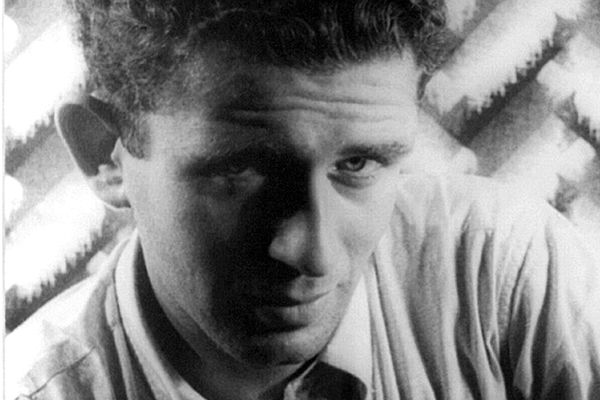
Photograph by Carl Van Vechten, Wikimedia Commons
“As you grow older, there’s no reason why you can’t be wiser as a novelist than you ever were before. You should know more about human nature every year of your life.”
“I don’t know if I need seclusion, but I do like to be alone in a room.”
About four weeks after I took the Vow, I had become so marooned in the repetitions of Raymond James Burns’s course in World Communism that I made the mistake
The ancient Egyptians believed there were seven parts to the soul which all behaved in different fashion after one’s death, some departing quickly, others resting within the body to emerge at the appropriate hour. The Ka, or Double, of the dead man, for example, did not usually present himself until the mummy was resting in his tomb some seventy days and more after death.
The portraits that follow are from a large number of photographs recently recovered from sealed archives in Moscow, some—rumor has it—from a cache in the bottom of an elevator shaft. Five of those that follow, Akhmatova, Chekhov (with dog), Nabokov, Pasternak (with book), and Tolstoy (on horseback) are from a volume entitled The Russian Century, published early last year by Random House. Seven photographs from that research, which were not incorporated in The Russian Century, are published here for the first time: Bulgakov, Bunin , Eisenstein (in a group with Pasternak and Mayakovski), Gorki, Mayakovski, Nabokov (with mother and sister), Tolstoy (with Chekhov), and Yesenin. The photographs of Andreyev, Babel, and Kharms were supplied by the writers who did the texts on them. The photograph of Dostoyevsky is from the Bettmann archives. Writers who were thought to have an especial affinity with particular Russian authors were asked to provide the accompanying texts. We are immensely in their debt for their cooperation.
What follows are the authors’ discussions on the first stirrings, the germination of a poem, or a work of fiction. Any number of headings would be appropriate: Beginnings, The Starting Point, etc. Inspiration would be as good as any.
He wrote other letters that day to Wes Joyce, proprietor of the Lion’s Head where he drank, and to Joe Flaherty the writer who lived in the same house as himself. The letters were all postmarked at three in the afternoon. That evening he went to the Lion’s Head, drank quietly, said little, and studied the faces of Joyce and Flaherty who were also at the bar and would receive his letters in the morning.
Norman Mailer on Norman Mailer being Norman Mailer.